How to Seal an Abandoned Well and What It Costs
The Well Guide
Updated October 23, 2026 · 18 min read
TL;DR
- An unused well is a direct path from the surface to the groundwater you and your neighbors drink. An open one is also a fall hazard, especially for children.
- Sealing, also called decommissioning, abandonment, or plugging, means removing the pump and piping, then filling the well from the bottom up with an approved grout like bentonite or neat cement.
- In most states, a licensed or registered well contractor does it, and a sealing record has to be filed. A few states, like Michigan and Iowa, let owners seal their own residential wells under specific rules.
- Cost depends mostly on depth. Shallow household wells typically run $500 to $1,500, wells 100 to 300 feet deep about $1,000 to $2,500, and deep wells $2,000 to $5,000 or more. Stuck pumps and debris push it higher.
- Many counties and conservation districts offer cost-share programs that cover 50 to 90% of the cost. Apply before the work starts, since most won't pay for work already done.
Plenty of properties have a well that nobody uses anymore. The house switched to city water years ago. A new well was drilled and the old one was left in place. A farm has a hand-dug well from the 1900s under a slab in the yard. Or a new owner finds a pipe sticking out of the basement floor and has no idea what it is.
An unused well doesn't just sit there harmlessly. This guide explains why, how to find out if you have one, what proper sealing involves, who's allowed to do it, what it costs, and how to get help paying for it.
This guide covers water wells. Old oil and gas wells are a different problem, regulated by your state's oil and gas agency, and they can cost $100,000 or more to plug. If you think you have an old oil or gas well on your land, don't touch it. Contact your state oil and gas regulator. In Pennsylvania, for example, landowners can report suspected legacy oil and gas wells through Penn State Extension.
Why Unused Wells Have to Be Sealed
1. They let contamination straight into the aquifer. Soil normally filters water as it soaks down toward the groundwater. A well skips that filter. Surface runoff, fertilizer, animal waste, fuel, and anything dumped into an old well can travel straight down into the aquifer, and from there to your new well, your neighbors' wells, and in some areas city wells. The Minnesota Department of Health describes unused wells as a drain that can carry contaminated water and waste into drinking water. In fractured rock regions, one poorly sealed well can affect water supplies miles away.
2. They're a fall hazard. Hand-dug wells and old cisterns are often 3 to 6 feet across and 10 to 30 feet deep. Covers rot, slabs crack, and lids get moved. Children and animals can fall in, and the fall alone can be fatal, even before you consider the water at the bottom.
3. They can mix layers of groundwater. Some wells pass through more than one water-bearing layer. An open borehole lets poor-quality water from one layer drain into a cleaner one below it.
4. You can be held responsible. In some states, an owner can be held liable if an unsealed well on their property contaminates someone else's water. Many states also require sellers to disclose wells when a property changes hands, and an unsealed well can complicate a sale or refinance.
The Keep-or-Seal Rule
Not every unused well has to be sealed right away. Some states let you keep a well out of service if it's in good condition and properly maintained. Here's how to decide:
| Your situation | What to do |
|---|---|
| Old well is open, damaged, has a missing or broken cover, or you can't tell its condition | Seal it. Secure it temporarily first (see below) |
| Hand-dug well, cistern, or well pit you don't use | Seal it. These are the most dangerous and the most likely to let in surface water |
| Drilled well you no longer use, after switching to city water or drilling a new well | Seal it, unless you have a real plan to use it and your state allows it to stay inactive |
| Drilled well in good condition that you want to keep for irrigation, livestock, or backup | Ask your state or county whether it needs a maintenance or inactive-well permit. Keep it capped, protected, and tested |
| Well is contaminated, or may be carrying contamination | Seal it. In many states, this is required |
| You're not sure there's a well at all | Do the search below before you decide |
If you want to keep a well, check the rules first. In Minnesota, for example, an unused well must be sealed unless the owner holds a Water Well Maintenance Permit. Other states have their own versions. Your state health department or environmental agency can tell you what applies.
Do You Have an Old Well? How to Find One
Old wells hide well. Many were covered, built over, or forgotten decades ago.
Look outside for:
- A low or sunken spot in the yard that doesn't make sense
- A metal, wood, or concrete cover or lid, or a manhole cover in an odd place
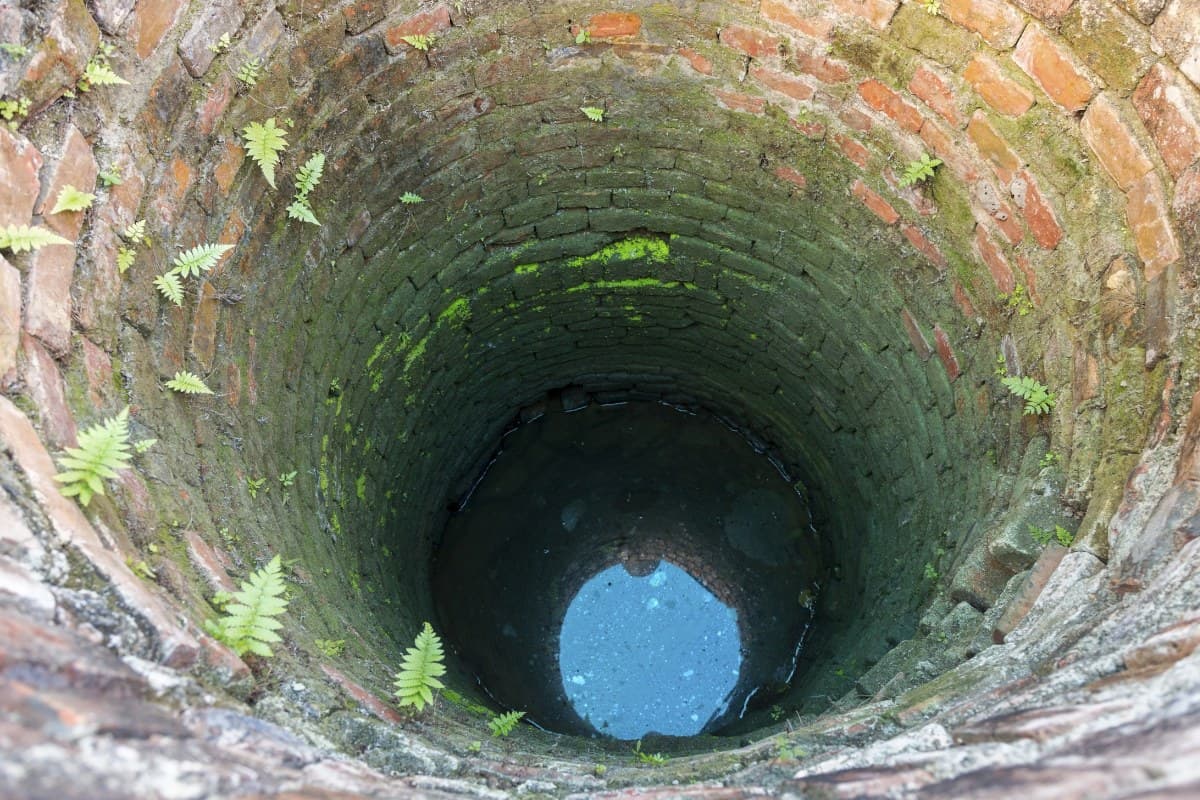
- A ring of stone, brick, or concrete, from about a foot to several feet across. That's often a hand-dug well
- A pipe 1 to 8 inches across sticking out of the ground. Septic and drain pipes can look similar, so check before assuming
- A spot that stays wet or green when the rest of the yard is dry
- An old windmill, well house, pump house, or hand pump
Look inside for:
- A pipe coming up through the basement floor, or a round concrete patch in the floor
- A small room in the basement, often under the exterior steps or a porch
- Glass block or a concrete patch in an exterior step or foundation wall
Check the records:
- Your state's well database. Most states keep well construction records, often searchable online by address
- Your property records and any well disclosure from when you bought the home
- The county health department or local water utility
- Previous owners, longtime neighbors, and local well drillers who may have worked on the property
- Old photos and fire insurance maps, often held by local historical societies
If you find something and aren't sure what it is, a well contractor or your county health department can usually identify it. Some utilities, like Madison Water Utility in Wisconsin, will even inspect a suspected well for free.
If You Find an Open Well Right Now
Deal with the safety risk today, even if sealing takes a few weeks to arrange.
- Keep people and pets away. Put up a fence, barricade, or caution tape around it.
- Cover it securely. Use a sheet of thick plywood or a steel plate that extends well past the edges, weighted or fastened down so it can't slide off. A loose board isn't enough.
- Don't climb in or lean over it. Old wells can collapse, and some hold gases that can overcome a person in seconds.
- Don't fill it with dirt, rocks, or trash. That doesn't seal it, can make proper sealing harder and more expensive, and in many states counts as illegal disposal.
- Don't pour anything into it. No chemicals, oil, or waste.
- Call a licensed well contractor to inspect it and quote the sealing.
How a Well Is Properly Sealed
Sealing a well means restoring the natural barrier between the surface and the groundwater. Done right, water can't travel down the old well, or between layers inside it. The details depend on the well type and your state's rules, but the process usually looks like this.
Before Sealing
- Gather information. The contractor finds the well's depth, diameter, casing length, and water level, usually from the well record and by measuring.
- Remove the pump, piping, and wiring. Anything left in the well can leave gaps in the seal. Stuck pumps and old debris are the main reason sealing jobs run over budget.
- Clear obstructions. Rocks, trash, or collapsed material may have to be fished out so the seal can reach the bottom.
- Disinfect the well. Many states require chlorinating the water in the well before sealing, so bacteria aren't trapped in the aquifer.
Drilled Wells
Drilled wells are narrow, often 4 to 6 inches across, and can be hundreds of feet deep.
- Fill from the bottom up. The sealing material goes in through a tremie pipe, a hose or pipe lowered to the bottom of the well. As grout is pumped in, it rises and pushes water out the top, leaving no air pockets or gaps. Pouring grout in from the top can trap water and leave voids.
- Use approved material. Common sealing materials include:
- Neat cement grout: cement and water, with a strict limit on water per bag
- Cement-bentonite grout: cement with a small percentage of bentonite clay
- Bentonite slurry: a heavy mix of bentonite clay and water
- Bentonite chips or pellets: dry clay pieces that swell and seal when wet. Often used for shallower or smaller wells, poured in slowly to avoid bridging
- Cut off the casing. The steel or plastic casing is usually cut off a few feet below the ground surface. Missouri, for example, calls for cutting it about 3 feet down.
- Cap and backfill. The top of the hole is sealed and covered with soil, often mounded slightly to allow for settling.
In some states, the lower part of a deep bedrock well can be filled with clean, disinfected gravel or similar material, with grout used through the casing and up to near the surface. Others require grout the full depth, especially when the casing depth is unknown.
Hand-Dug Wells and Cisterns
Dug wells are wide, shallow, and usually lined with stone, brick, or concrete. They're handled differently:
- The well is cleaned out and disinfected.
- The upper few feet of the lining are removed or pushed in, so surface water can't follow the old lining down.
- The well is filled with clean, disinfected fill, then sealed near the top with clay-rich soil or a grout layer.
- The top is mounded so water runs away from the spot.
Driven Wells and Well Points
Driven wells are narrow pipes pounded into shallow ground. The pipe is usually pulled if possible, and the hole is filled with bentonite. If the pipe can't be pulled, it's filled with bentonite or grout from the bottom up.
Wells in Basements and Pits
Wells inside a basement, or in an underground pit, need extra care because the top sits below ground level and near a structure. The contractor seals the well and then fills or seals the pit. These often cost more because of limited access.
What Doesn't Count as Sealing
- Dumping dirt, gravel, or rocks in the top
- Filling it with trash or construction debris
- Capping it with a board, slab, or lid alone
- Pouring a bag of concrete into the top
None of these stop water from moving down the well, and some make proper sealing harder later. Concrete in particular is not an approved grout in some states, including Missouri. Use what your state approves.
Who's Allowed to Seal a Well
This is where rules vary most by state. Some require a licensed contractor for every well. Others allow owners to seal certain shallow wells themselves, but still require a report.
| State | Who can seal it | Reporting and permits | Source |
|---|---|---|---|
| Minnesota | Only an MDH licensed well contractor. "You cannot do it yourself." | Contractor files a Well and Boring Sealing Record. You get a copy. | Minnesota Department of Health |
| Wisconsin | Only licensed well drillers and pump installers, required since 2008 | Well Abandonment Form 3300-005, with a copy to the owner | Madison Water Utility, Winnebago County |
| Michigan | Owners may plug a well at their own residence, including outlying farm wells. A registered contractor can plug any well. The state recommends a contractor, and says flowing and bedrock wells should be plugged by one. | Follow state plugging methods. Local health departments may have their own requirements. | Michigan EGLE |
| Ohio | A private water systems contractor registered with the Ohio Department of Health. Owners can seal their own well only by registering as a contractor. | Sealing permit from the local health district, an inspection, and a sealing report filed with the health district and ODNR | Hamilton County Public Health |
| Iowa | A certified well driller, pump installer, or well plugger, or the homeowner with county oversight | Iowa DNR Abandoned Water Well Plugging Record | Warren County, Iowa |
| California | A licensed C-57 well drilling contractor | County permit before work and a completion report, often due within 30 days | San Diego County rules, as cited by a licensed contractor |
| Mississippi | Licensed contractor for wells 6 inches or wider and more than 100 feet deep | Decommissioning form filed with the state within 30 days | Mississippi DEQ |
| Nebraska | Licensed Nebraska well contractor | Work must be reported to the state | University of Nebraska Lincoln |
Your next step: call your state's well program, usually in the health department or environmental or natural resources agency, or your county health department. Ask:
- Who is allowed to seal the well?
- What materials are approved?
- Is a permit or notice required before the work?
- What form gets filed, and by whom?
- Is there a cost-share program?
Paperwork: Keep the Sealing Record
When the well is sealed, the contractor files a sealing or abandonment record with the state and gives you a copy. Keep it with your property papers.
You'll want it when you sell or refinance. Lenders and buyers may ask for proof that old wells were properly sealed, and some states require well disclosures at sale. In Minnesota, sellers must give the buyer a well disclosure statement before the purchase agreement is signed. If you're buying, see our guide to buying a house with a well.
What It Costs
Depth is the biggest factor, since contractors usually price by the foot and deeper wells take more grout.
Typical cost by well depth (2026):
| Well depth | Typical cost |
|---|---|
| Shallow, under 100 feet | $500 to $1,500 |
| Medium, 100 to 300 feet | $1,000 to $2,500 |
| Deep, over 300 feet | $2,000 to $5,000 or more |
| Permit fees, where required | About $50 to $200 |
These ranges come from a licensed California well contractor's published 2026 pricing, and they line up with what public agencies cite:
| Source | Typical cost for a household well |
|---|---|
| Madison Water Utility, Wisconsin (current) | About $800 to $1,500, depending on depth and whether the pump has to be removed |
| Hamilton County Public Health, Ohio (2012) | About $500 to $1,500, depending on site conditions and depth |
| Missouri guidance (Farm Progress, 2015) | About $300 to $1,200, depending on well type and depth |
| Shell Creek Watershed, Nebraska (2005 to 2007) | 23 domestic and livestock wells averaged $354 each |
The older figures are useful as a floor, since costs have risen. For a typical household well today, plan on $500 to $1,500 for a shallow well and more as depth increases. Get at least two quotes.
What pushes the price up:
- Depth. Contractors often charge by the foot, so a deep bedrock well costs more than a shallow one.
- Diameter. Wider wells take far more sealing material.
- A pump still in the well, especially one that's stuck, along with old pipe and wire.
- Debris or collapse that has to be cleared before sealing.
- Hard access, like a well in a basement, a pit, a wooded lot, or under a structure.
- Hand-dug wells and cisterns, which can need a lot of fill.
- Local permit and inspection fees.
What brings it down:
- Sealing while a contractor is already on site, for example while drilling a new well or doing other well work.
- Group projects, where several neighbors seal wells at once.
- Cost-share programs, below.
Cost-Share Programs Can Cover Most of It
Many states and counties actively help pay to seal old wells, because it protects shared groundwater. Examples:
| Program | What it covers |
|---|---|
| Nebraska Natural Resources Districts | Typically 60 to 75% of the cost. Owners in one watershed program often paid under $100 out of pocket |
| Winnebago County, Wisconsin | Up to 90% for wells in high-concern areas, or up to 50% (max $1,000) elsewhere |
| City of Madison, Wisconsin | Up to 50%, max $1,000, plus limited state grants based on income |
| Iowa Grants to Counties (example: Warren County) | Up to $500. If you plug it yourself under county supervision, it covers materials only |
| Delta Township, Michigan | 50%, up to $700, when a home connects to township water |
| Minnesota | Local grants and cost-share in some counties and cities, plus low-interest loans for eligible homeowners |
The rule almost every program shares: get approved before the work starts. Most require an application, an estimate or two, and a signed agreement first. Work done before approval usually isn't eligible.
Where to look: your county health department, soil and water conservation district, natural resources district, local water utility, or state well program.
Cost Over Time: Seal It or Leave It
| Choice | Upfront cost | Ongoing risk | 10-year outlook |
|---|---|---|---|
| Seal it now | About $500 to $1,500 for a shallow well, more for deep wells, often far less with cost-share | None once sealed and recorded | A one-time cost, and the record helps at sale |
| Keep it as a permitted inactive well | Permit fees where required, plus testing and upkeep | Has to stay capped, protected, and maintained | Ongoing cost and responsibility, worth it only if you'll really use the well |
| Leave it as is | $0 | Fall hazard, contamination of your water and your neighbors', possible liability, and problems at sale | You'll likely pay to seal it eventually, often under more pressure, and possibly without cost-share |
If You're Switching to City Water or Drilling a New Well
Old wells most often get left behind during one of these two projects, and either one is the cheapest time to seal it.
- Switching to city water: many utilities require the old well to be sealed or disconnected so it can't cross-connect with the public supply. Ask your utility what it requires. See our well water vs. city water guide.
- Drilling a new well: ask the driller to quote sealing the old well as part of the job. The equipment is already there. See our well drilling cost guide.
If you're also retiring an old septic system, the process is similar. Our sister site covers what it costs to remove or fill an old septic tank.
How to Hire a Contractor
Questions to ask:
- Are you licensed to seal wells in this state?
- What materials will you use, and are they approved here?
- Does the price include removing the pump, piping, and wire?
- What happens to the price if the pump is stuck or there's debris in the well?
- Will you disinfect the well before sealing?
- How far below the surface will you cut the casing?
- Will you file the sealing record with the state and give me a copy?
- Do you work with the local cost-share program?
Get at least two quotes. Some cost-share programs require two estimates when the first is over a set amount. A quote much lower than the rest often skips pump removal, disinfection, or filing.
Common Mistakes
- Filling it with dirt or rocks yourself. It isn't sealed, it may break state rules, and proper sealing gets harder and more expensive.
- Covering it with a board or slab and forgetting about it. Covers rot and move. The well underneath is still open to contamination.
- Using concrete where it isn't approved. Some states don't accept it as a sealing material.
- Leaving the pump in. Equipment left in the well can leave gaps in the seal.
- Starting work before cost-share approval. Most programs won't pay for work already done.
- Not getting the sealing record. Without it, you can't easily prove the well was sealed when you sell.
- Assuming a neighbor's old well isn't your problem. It may share your aquifer. Local health departments can help if a well near you looks open or abandoned.
- Leaving an open well uncovered while you get quotes. Secure it the same day you find it.
When to Call a Pro
Almost always. In many states, sealing a well legally requires a licensed contractor, and even where it doesn't, filling a deep well from the bottom up takes equipment most homeowners don't have.
Call a licensed well contractor when:
- You find an old well or suspect one
- You're switching to city water or drilling a new well
- A well is damaged, open, or has a missing cover
- A well may be contaminated
- You're selling a property with an unused well
DIY-friendly: finding the well, securing it temporarily, researching your state's rules, applying for cost-share, and collecting quotes.
Get Expert Well Help
Connect with qualified well professionals in your area. Free quotes, no obligation.
Frequently Asked Questions
How much does it cost to cap or seal an old well?
Mostly it depends on depth. Shallow household wells typically cost $500 to $1,500, wells 100 to 300 feet deep about $1,000 to $2,500, and deep wells $2,000 to $5,000 or more. Stuck pumps, debris, and hard access add to it. Cost-share programs often cover 50 to 90%.
Can I seal an old well myself?
It depends on your state. Minnesota and Wisconsin require a licensed contractor. Ohio requires a registered contractor, though owners can register to seal their own well. Michigan lets owners plug a well at their own residence, and Iowa allows it with county supervision. Check with your state well program before doing anything.
Is it illegal to have an abandoned well on my property?
In many states, an unused well that isn't permitted or maintained must be sealed. Rules vary, so check with your state health department or environmental agency.
What is used to seal an abandoned well?
Approved grouts like neat cement, cement-bentonite grout, bentonite slurry, or bentonite chips, placed from the bottom up. Some states don't allow concrete. Dug wells may be filled with clean, disinfected fill and sealed near the top.
Is capping a well the same as sealing it?
No. A cap or cover only blocks the top. Sealing fills the well so water can't move down it into the aquifer. An unused well needs to be sealed, not just capped.
How do I find an old well on my property?
Look for sunken spots, odd covers, stone or brick rings, pipes in the yard or basement floor, and old well houses or pumps. Check your state's well database, property records, and ask previous owners or local drillers.
Is there financial help to seal an old well?
Often, yes. Many counties, conservation districts, and Nebraska's Natural Resources Districts offer cost-share, typically covering 50 to 90%. Apply before work begins.
Do I need to seal my old well if I switch to city water?
Usually, unless you keep it permitted for irrigation or another use where your state allows it. Many utilities also require the old well to be disconnected so it can't cross-connect with the public supply.
Glossary
- Well abandonment (decommissioning, plugging, sealing): Permanently filling and sealing an unused well so it can't carry contamination into groundwater.
- Aquifer: The underground layer of rock, sand, or gravel that holds the water a well draws from.
- Casing: The steel or plastic pipe lining the upper part of a drilled well.
- Tremie pipe: A pipe or hose lowered to the bottom of a well so grout can fill it from the bottom up.
- Neat cement grout: A mix of cement and water used to seal wells.
- Bentonite: A natural clay that swells when wet, used as chips, pellets, or slurry to seal wells.
- Bridging: When sealing material gets stuck partway down the well and leaves a gap below it.
- Hand-dug well: A wide, shallow well dug by hand, usually lined with stone, brick, or concrete.
- Sealing record: The official report a contractor files with the state when a well is sealed.
- Cost-share program: A local or state program that pays part of the cost to seal a well.
Related Guides
Sources
- Minnesota Department of Health: Abandoned Wells
- Mississippi DEQ: Well Abandonment Guidance
- City of Madison Water Utility: Well Abandonment FAQ
- University of Nebraska Lincoln Water: Well Decommissioning Process and Cost Shares
- Winnebago County, Wisconsin: Well Abandonment Cost-Share Program
- Farm Progress: Take Time to Plug Abandoned Wells on the Farm
- Michigan EGLE: Plugging Abandoned Wells
- Hamilton County Public Health (Ohio): Private Water System Sealing Fact Sheet
- Warren County, Iowa: Wells and Grants to Counties
- Delta Township, Michigan: Well Plugging Program
- Penn State Extension: Legacy Oil and Gas Wells
- SC Well Service: Well Abandonment Guide (2026 pricing)
The Home Guide Network Editorial Team
Our guides are researched and written by the editorial team at The Home Guide Network, an independent publisher covering home systems for homeowners. We cover garages, basements, septic systems, and wells across four dedicated guide sites. Learn more at thehome.guide.