Well Pump Maintenance: The Complete Annual Schedule for Private Well Owners
The Well Guide
Updated March 2026 · 13 min read
Quick answer:
Well pump maintenance is primarily system maintenance, not pump maintenance. The submersible pump itself is sealed underground and inaccessible for DIY service — it runs until it fails and is then replaced. What homeowners maintain is everything around it: annual water quality testing, annual pressure tank pre-charge check, annual wellhead inspection, seasonal preparations for winter and spring, and the maintenance records that track the system's health over time. A well owner who tests the water annually, checks the pressure tank air charge once a year, and keeps the wellhead properly sealed and graded will prevent the vast majority of preventable failures on a private well system.
The Honest Reality About Well Pump Maintenance
Before going through the maintenance schedule, it is worth being clear about what “well pump maintenance” actually means for a homeowner — because most people imagine something closer to car maintenance than what the reality actually is.
A submersible well pump sits at the bottom of a casing 100 to 400 feet underground, submerged in water, and runs on 240-volt electrical power. There is no oil to change, no filter to replace, no belt to inspect. The pump is a sealed unit. The only way to access it is to pull the entire drop pipe and pump out of the well, which requires a pump hoist truck and a licensed well contractor. It costs $800 to $2,500 for a professional to pull and replace a submersible pump.
What this means practically: homeowners do not maintain the pump itself. They maintain the system around the pump, and they monitor the signals that indicate whether the pump is healthy or developing problems. The pump is maintained by professional contractors every 5 to 7 years for inspection or when it fails and needs replacement.
The maintenance tasks that fall to homeowners are the ones that actually prevent the most common well failures: contamination events, pressure system problems, and seasonal damage. These tasks are genuinely manageable, do not require specialized tools, and take a total of 2 to 3 hours per year.
The Complete Annual Well Maintenance Schedule
| Task | Frequency | DIY or Professional | Cost |
|---|---|---|---|
| Water quality test (bacteria and nitrates minimum) | Annually — spring | DIY sample, lab analysis | $100 to $300 |
| Extended water quality panel | Every 3 to 5 years or when problems noticed | DIY sample, lab analysis | $150 to $400 |
| Pressure tank pre-charge check | Annually | DIY | $0 |
| Wellhead visual inspection | Annually — spring and fall | DIY | $0 |
| Professional well inspection | Every 3 to 5 years | Professional | $250 to $500 |
| Treatment equipment service | Per manufacturer schedule | DIY or professional | $50 to $300 |
| Maintenance log update | After every test, inspection, or service | DIY | $0 |
| Winter preparation (cold climates) | Annually — fall | DIY | $20 to $100 |
| Spring startup check | Annually — spring | DIY | $0 |
| Septic pumping (if applicable) | Every 3 to 5 years | Professional | $300 to $600 |
Task 1: Annual Water Quality Testing
This is the single most important maintenance task for a private well owner and the one most commonly skipped. The CDC and NGWA both recommend annual water testing for private wells at minimum. Unlike city water, which is tested hundreds of times per year by the utility, a private well is tested only when the owner initiates it.
What to test annually:
- Total coliform bacteria
- E. coli bacteria
- Nitrates
These three are the minimum annual panel. Bacteria and nitrates are the two most common health-relevant contaminants in private wells nationally, and both are odorless, colorless, and tasteless — undetectable without testing.
When to test:
Spring is the recommended testing season. Snowmelt and spring rainfall increase groundwater recharge and can carry surface contamination into shallow aquifers. A spring test catches any contamination introduced over winter before it goes undetected through summer.
When to test immediately regardless of schedule:
- After any flooding event that affects the property
- After any work is done on the well or pump
- After a nearby land use change (new agricultural operation, new construction, underground fuel storage)
- When water changes in taste, odor, or appearance
- When a household member develops unexplained gastrointestinal illness
Extended panel every 3 to 5 years:
In addition to the annual bacteria and nitrates test, a more comprehensive panel every 3 to 5 years should cover pH, hardness, iron, manganese, TDS (total dissolved solids), and any contaminants relevant to local geology or land use. Wells in agricultural areas should test for pesticides and herbicides. Wells in areas with natural arsenic geology should test for arsenic. Wells in areas with uranium-bearing bedrock should test for uranium and radon.
See the how to test your well water guide for the complete panel recommendations by region and the correct sample collection procedure.
Task 2: Pressure Tank Pre-Charge Check
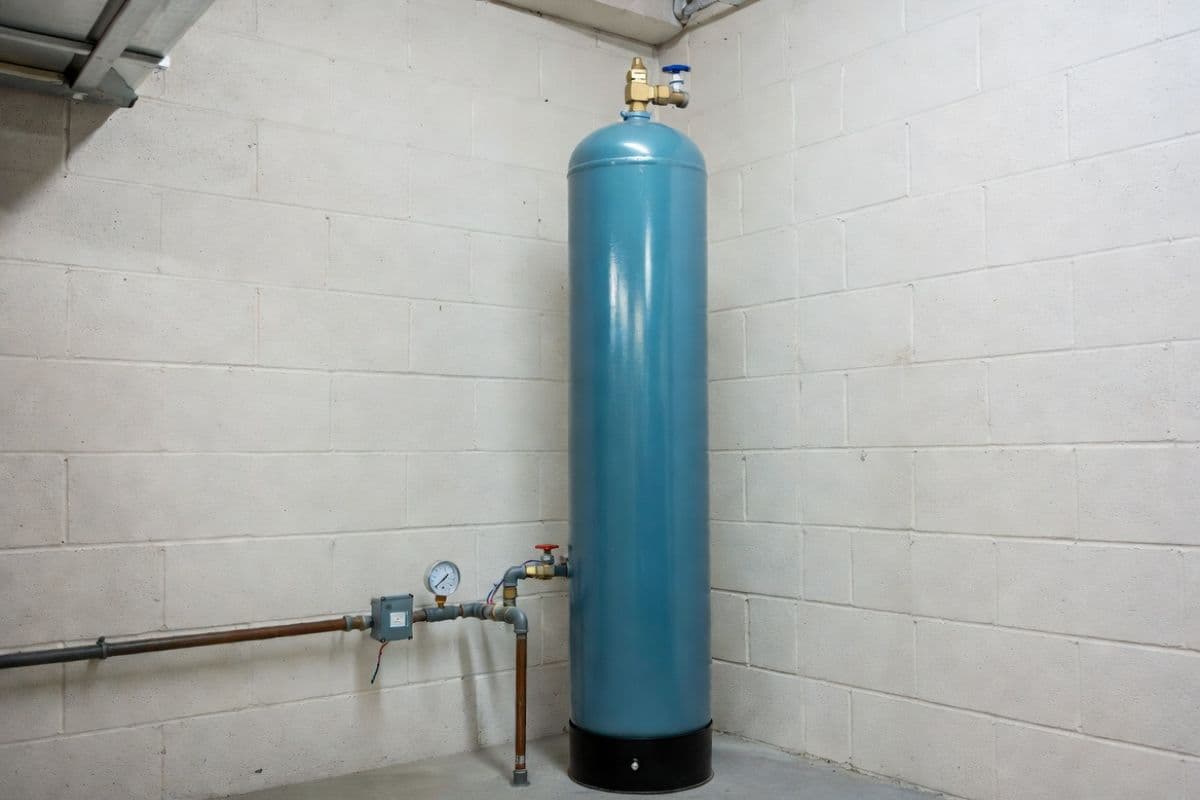
The pressure tank pre-charge is the air pressure in the tank's air chamber. If it drops below the correct level, the pump begins short-cycling — turning on and off every few seconds — which dramatically shortens pump life. Checking and correcting pre-charge pressure takes 10 minutes and requires only a standard tire pressure gauge.
The correct pre-charge pressure:
2 PSI below the pump's cut-in pressure.
- For a 30/50 pressure switch: pre-charge should be 28 PSI
- For a 40/60 pressure switch: pre-charge should be 38 PSI
The procedure:
Turn off the pump at the circuit breaker
Open a cold water faucet and let it run until water completely stops — the tank is now empty
Close the faucet
Locate the Schrader valve on the pressure tank — it looks like a standard tire valve and is usually at the top or side of the tank
Check the pressure with a tire gauge
If the pressure is low, add air with a bicycle pump or air compressor until you reach the target pressure
If water sprays out of the Schrader valve when you press it, the diaphragm has failed and the tank needs replacement. See the pressure tank replacement cost guide for what this costs.
Restore power to the pump
What incorrect pre-charge causes:
Too low: the diaphragm bottoms out against the tank shell on every cycle, accelerating wear and failure.
Too high: the tank delivers less drawdown capacity than rated, causing more frequent pump cycling.
Check pre-charge annually, always with the tank empty. Never check pre-charge with water in the tank — the water pressure will give a false reading.
Task 3: Wellhead Visual Inspection
The wellhead is the surface-level opening through which contamination most commonly enters a well. An annual visual inspection takes 10 minutes and can identify problems before they become contamination events.
What to check at the wellhead:
Casing height
The well casing should extend at least 12 inches above the surrounding ground surface. If soil has settled or eroded and the casing now extends less than 12 inches above grade, surface water can pool around and potentially enter the well. This is correctable — a licensed well contractor can add a casing extension.
Well cap condition
The sanitary well cap should be intact, properly seated, and undamaged. No cracks, no gaps where the cap meets the casing, no evidence that insects or small animals have entered. A damaged well cap should be replaced immediately — it is an inexpensive part ($20 to $50) and the first line of defense against surface contamination.
Surface drainage
The ground immediately around the wellhead should slope away from the casing in all directions. Standing water anywhere near the wellhead is a contamination risk. Regrade or add gravel if water pools near the well.
Vegetation clearance
No trees, shrubs, or plants with woody root systems should be within 10 feet of the wellhead. Tree roots can damage the casing and create pathways for surface contamination to enter. Grass and shallow-rooted plants are acceptable and actually help prevent soil erosion.
Chemical storage proximity
No pesticides, fertilizers, motor oil, paint, or other chemicals should be stored within 50 feet of the wellhead. Check that nothing has accumulated near the well over the past year.
Flooding vulnerability
If the well is in a low-lying area that flooded in the past year, assess whether the wellhead needs to be raised or the casing extended. A well that floods should be shock chlorinated and tested before use. See the how to shock chlorinate a well guide for the full procedure.
Seasonal Maintenance
Spring
Spring is the highest-priority maintenance season for private well owners. Snowmelt and spring rainfall represent the period of greatest contamination risk for shallow wells.
Spring tasks:
- Conduct the annual water test (bacteria, nitrates minimum)
- Perform the wellhead visual inspection
- Check the well cap for any winter damage
- Inspect pressure tank and plumbing for any damage that may have occurred if temperatures dropped below freezing
- Flush the system if the home has been vacant over winter — run all faucets for 5 minutes to clear any stale or potentially contaminated water before resuming normal use
- Check treatment equipment (filters, softeners, UV systems) and replace any cartridges or consumables per the manufacturer's schedule
For seasonal properties: If the property was closed over winter, treat the spring reopening as a full system restart. Inspect, test, and flush before using the water for drinking or cooking.
Summer
Summer is the season of drought risk for wells drawing from shallow unconfined aquifers. Dry periods cause the water table to drop, reducing well yield and occasionally causing wells to run low.
Summer tasks:
- Monitor water pressure during peak demand periods (morning showers, irrigation, laundry)
- If pressure seems lower than normal or recovery seems slower after high use, note it and compare to the same period in previous years
- Avoid excessive simultaneous water use (filling a pool while running irrigation and doing laundry simultaneously) that can temporarily exceed the well's yield
- Keep the wellhead clear of vegetation growth — summer growth is fast and weeds can accumulate quickly around the casing
- If a pool is being filled from the well, do it over multiple days in sessions to allow well recovery. See the complete well guide for yield management guidance.
Fall
Fall preparation is critical in cold climates where freezing temperatures can damage above-ground system components.
Fall tasks:
- Inspect insulation on any exposed pipes in unheated spaces (garages, crawlspaces, utility rooms where temperatures drop below freezing)
- Check the pressure switch — in unheated spaces, the contacts can freeze in winter. Consider wrapping with heat tape or moving to a heated space if possible.
- Disconnect and drain any outdoor hose bibs or irrigation lines that connect to the well system
- Replace treatment equipment cartridges before winter — a fresh filter going into the season that may see reduced maintenance access is better than an exhausted one
- Service the water softener if applicable: check salt level, clean brine tank if needed, verify settings
Winter
In cold climates, winter maintenance is primarily about freeze prevention.
Winter tasks:
- Keep the pump house or utility room where pressure tank and controls are located heated to above freezing
- If pipes run through unheated spaces (garages, crawlspaces), confirm heat tape is functioning
- In extreme cold events (sustained temperatures below 0°F), let a small trickle of water run overnight through a cold water faucet to prevent freezing in pipes
- Do not let snow or ice accumulate on the wellhead — periodically check that the well cap is visible and accessible
- If the home will be vacant for extended winter periods, have a professional winterize the system or drain it completely to prevent damage
Treatment Equipment Service Intervals
Most well owners have at least one piece of water treatment equipment installed. Each has its own service schedule that is independent of the annual well maintenance tasks above. Neglecting treatment equipment does not just reduce its effectiveness — it can make water quality worse than having no treatment at all (an exhausted carbon filter, for example, can release accumulated contaminants back into the water).
Sediment filter cartridge
Replace every 3 to 6 months depending on your water's sediment load. A whole-house sediment filter with a heavily loaded cartridge reduces water pressure noticeably before it fails completely. If you notice pressure dropping, check the sediment filter first — it is the most common and most overlooked maintenance item in a treated well system.
UV disinfection lamp
Replace the UV lamp annually regardless of whether it appears to be working. UV lamps degrade gradually over approximately 9,000 hours of operation (roughly one year of continuous use), producing less and less germicidal output before they fail visibly. A lamp that appears illuminated may be producing insufficient UV intensity to disinfect the water. Most UV systems have an annual lamp replacement reminder built into the controller. Do not skip it.
Water softener
Check the brine tank salt level monthly and refill as needed. The resin bed that softens the water regenerates automatically using salt brine and does not require replacement under normal circumstances, but it does require a salt supply to function. At least once per year, inspect the brine tank for salt bridges (a hardened crust that prevents salt from dissolving properly) and break up any bridging with a broom handle. Every 5 to 10 years, a professional cleaning of the resin bed may be warranted if softening performance declines.
Activated carbon filter
Replace the carbon block or granular activated carbon media annually. Carbon filters remove chlorine, taste, odor, and some organic compounds by adsorption — the carbon surface captures contaminants until it is saturated, at which point it stops working without warning. An exhausted carbon filter can also release previously captured contaminants back into the water if flow rates or water chemistry change. Annual replacement is the correct interval for most residential carbon filters regardless of visible condition.
Reverse osmosis membrane
Replace the RO membrane every 2 to 3 years under normal use. The sediment and carbon pre-filters on an RO system should be replaced every 6 to 12 months. A declining flow rate from the RO faucet or a noticeable change in water taste are the first signs that pre-filters or the membrane are exhausted.
Monitoring Well Yield Over Time
Declining well yield is one of the earliest warning signs of a developing problem — and one of the least monitored by homeowners because there is no alarm that goes off when yield drops gradually over years.
The signs of declining yield:
- Water pressure that takes noticeably longer to recover after heavy use than it did in previous years
- The pump running for longer periods to achieve the same pressure level
- Low or no water during summer dry periods when the same well produced adequately in previous summers
- A pressure gauge that drops lower than usual during normal household use before the pump activates
How to track yield informally:
Note the pump run time and pressure recovery time after a high-demand event — filling a bathtub, running the dishwasher and clothes washer simultaneously — at the same season each year. If the same event takes noticeably longer for the system to recover over successive years, yield is declining.
When to act:
Yield decline that is catching up to household demand needs professional evaluation before it becomes a no-water situation. Options include hydrofracturing to open fractures in bedrock wells, deepening the well to reach a lower productive zone, or drilling a new well. All are significantly more manageable when addressed proactively rather than as an emergency. See the well running dry guide for the complete decision framework.
What a Professional Well Inspection Covers
The NGWA recommends a professional well inspection every 3 to 5 years, or annually for wells older than 15 years. A professional inspection includes components that homeowners cannot assess themselves.
Flow rate test
The contractor measures how many gallons per minute the well produces under pumping conditions. This is compared to the original well completion report if available. Declining flow rate identifies yield problems before they become failures.
Pump motor performance check
Using an amp meter, the contractor measures the motor's electrical draw and compares it to rated specifications. A motor drawing more amperage than rated is working harder than it should — typically indicating wear or partial blockage.
Pressure switch inspection
The contractor checks the switch contacts for corrosion, verifies the cut-in and cut-out pressure settings are correct, and confirms the switch is cycling the pump properly.
Water level measurement
The contractor measures the static water level and the pumping water level, comparing to historical records. Declining water levels indicate aquifer stress or pump intake issues.
Wellhead and casing inspection
Visual inspection of casing condition, grouting, cap seal, and surface drainage — the same items homeowners check annually, but with a professional's eye for subtle signs of deterioration.
Water quality test
Most professional inspections include a standard bacteria and nitrates test at minimum. Extended panels are available as add-ons.
Cost
Professional well inspection typically costs $250 to $500 depending on scope and region. This is not an emergency expense — budget for it every 3 to 5 years as part of normal homeownership.
The Maintenance Log: The Most Underrated Well Ownership Practice
A maintenance log is a simple record of every test, inspection, service, and repair performed on the well system. Most homeowners do not keep one. Those who do have a significant advantage in two situations: diagnosing problems and selling the property.
What to record:
- Date of every water test, the lab used, and the results
- Date and results of every professional inspection
- Date and details of any repairs — what was replaced, who did the work, what it cost
- Date and results of pressure tank pre-charge checks
- Any observed changes in water quality, pressure, or system behavior and when they first appeared
- Treatment equipment service dates and cartridge replacement dates
Why it matters for problem diagnosis:
When a problem develops, a maintenance log lets you say “pressure has been declining since last August” rather than “I think the pressure might be lower than it used to be.” Contractors diagnose problems faster and more accurately when the history is documented.
Why it matters for resale:
A well with documented annual water test results showing clean water, documented professional inspections, and a complete service history is a selling point. A well with no maintenance records is a question mark that buyers and their inspectors treat as a liability. The maintenance log is the difference between a buyer feeling confident in the system and a buyer requesting a price reduction.
A simple notebook or spreadsheet kept near the pressure tank is sufficient. There is no required format.
When to Call a Professional Immediately
Some signs require professional attention without delay. Do not attempt to diagnose or repair these yourself.
Call a professional immediately if:
No water from any tap — the pump may have failed or lost prime
A sudden spike in the electric bill with no change in usage — a pump drawing excessive amperage is a sign of motor failure
The pump runs continuously without shutting off — indicates a failed pressure switch, a leak in the system, or a pump unable to build adequate pressure
Pump short-cycling (turning on and off every few seconds) and the pressure tank pre-charge check does not resolve it — a failed diaphragm or serious system issue
Water that suddenly changes color, odor, or taste with no recent event to explain it
Any electrical burning smell near the pump controls or pressure switch
A visible crack in the well casing above grade
When repair costs approach 50 percent of replacement cost, replacement is usually the smarter financial decision. Our well pump cost calculator helps you compare maintenance investment against full replacement cost based on your specific pump and well.
Frequently Asked Questions
How often should a well pump be serviced?
How do I know if my well pump needs maintenance?
What is the most important well maintenance task?
How do I check my well pressure tank?
How long does a well pump last?
What should I do to maintain my well in winter?
How do I keep records of my well maintenance?
When should I have my well professionally inspected?
Glossary
Static Water Level
The distance from the ground surface to the water surface in the well when the pump has not been running for an extended period, measured when the aquifer is at its undisturbed natural level. Static water level is measured during professional inspections and compared to previous measurements to track whether the water table is declining over time. A rising static water level over years indicates good aquifer recharge. A declining static water level indicates aquifer stress and is an early warning of potential yield problems.
Pressure Switch
The electrical component mounted near the pressure tank that controls when the well pump turns on and off. The pressure switch monitors the water pressure in the system and activates the pump when pressure drops to the cut-in setting (typically 30 or 40 PSI) and deactivates it when pressure reaches the cut-out setting (typically 50 or 60 PSI). A failing pressure switch can cause the pump to run continuously, fail to start, or short-cycle. Pressure switches cost $20 to $50 and can be replaced by a homeowner with basic electrical knowledge, though most choose to have a professional handle it due to the 240-volt wiring involved.
Short Cycling
The condition where the well pump turns on and off every few seconds rather than running for the normal 1 to 2 minutes per cycle. Short cycling is most commonly caused by a waterlogged pressure tank that has lost its air charge and can no longer buffer the pressure change between pump cycles. It can also be caused by an undersized pressure tank, a failed diaphragm, or a pressure switch set with too narrow a differential. Short cycling dramatically accelerates pump motor wear — a pump rated for 15 years of normal service may fail in 2 to 5 years if short-cycling continuously.
Flow Rate
The volume of water a well produces per unit of time, typically expressed in gallons per minute (GPM). Residential wells are typically required to produce a minimum of 1 GPM for FHA loan qualification, though most families of four need 5 GPM or more for comfortable daily use. Flow rate is measured during a professional well inspection by pumping the well and monitoring output while recording the water level. Declining flow rate over successive inspections is one of the earliest indicators of a developing well performance problem.
External Resource
The National Ground Water Association (NGWA) maintains a comprehensive well owner resource center including their annual maintenance checklist, guidance on finding a licensed well contractor, and state-by-state well regulation information. The NGWA checklist aligns with the maintenance schedule in this guide and is the industry standard reference for private well maintenance recommendations.
Also on Our Network
Well pump maintenance does not exist in isolation. These guides from our partner sites cover the systems that interact directly with your well.
Septic System Maintenance Checklist
The Septic Guide
Most properties with a private well also have a septic system. The annual septic maintenance schedule mirrors the well maintenance schedule in structure and pairs naturally with it. Keeping both systems on the same annual service calendar simplifies the work.
Water Softeners and Septic Systems
The Septic Guide
If your well water is hard and you run a water softener, the brine discharge from the softener affects your septic system. This guide covers what the interaction looks like, what concentrations are problematic, and how to configure your softener to minimize septic impact.
The Complete Basement Waterproofing Guide
The Basement Guide
Your pressure tank, pressure switch, and treatment equipment almost certainly live in the basement. Basement water intrusion is the most common cause of pressure switch corrosion and equipment damage. This guide covers what to look for and how to address it before it affects your well system.
Related Guides
Get Expert Well Help
Connect with qualified well professionals in your area. Free quotes, no obligation.