Frozen Well Pipes: How to Thaw Them and Keep Your Well From Freezing
The Well Guide
Updated October 22, 2026 · 12 min read
Some links on this page are affiliate links. If you purchase through them, we may earn a small commission at no extra cost to you. This does not affect our recommendations. Affiliate disclosure.
TL;DR
- When a well system freezes, it's usually the small tube under the pressure switch, the pipe where the water line enters the house, or exposed pipe in a well house. The well itself rarely freezes.
- Turn off the pump's breaker before you start. A pump running against a frozen line can overheat.
- Thaw with a hair dryer or space heater, starting at the pressure switch tube. Never use an open flame.
- After thawing, check the pressure switch, pressure tank, and pipes for cracks before turning the pump back on.
- A thermostatic outlet, a small heater, heat cable, and pipe insulation protect most systems for under $150.
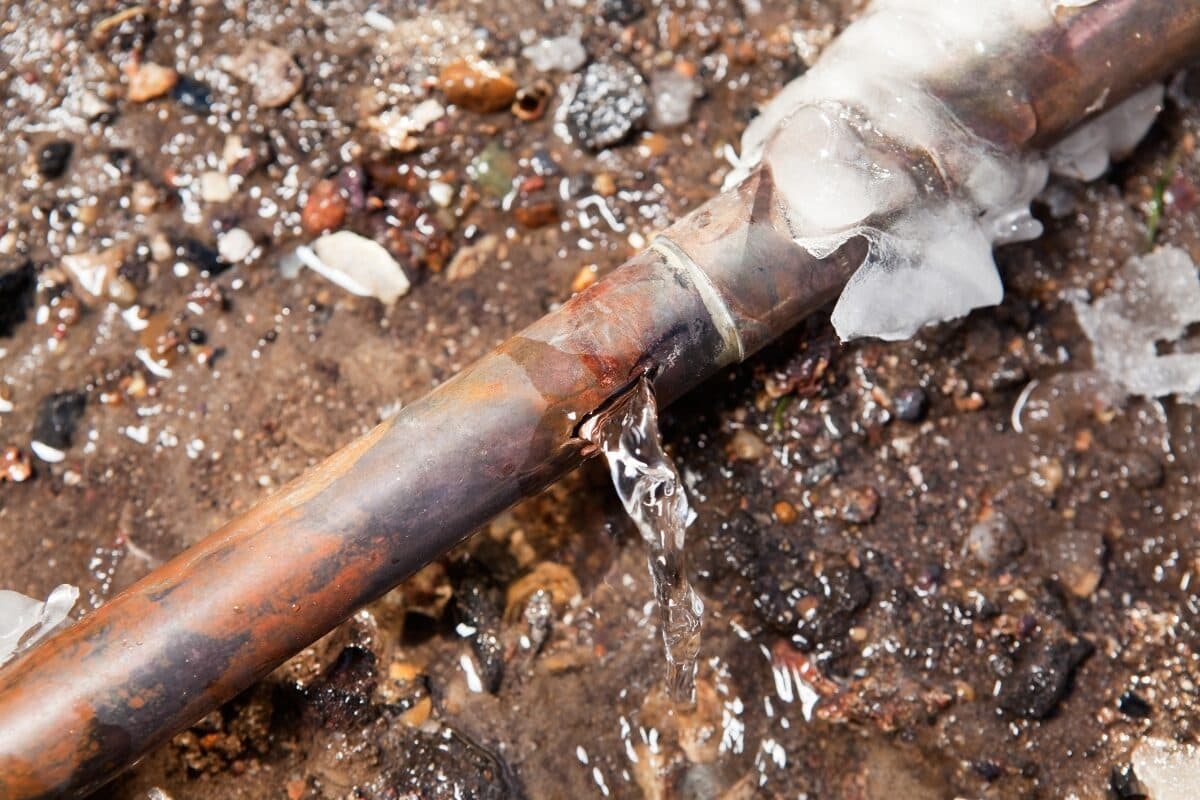
You turn on the faucet on a frigid morning and get nothing, or a sputter and then nothing. On a well system, that usually means something froze between the well and your faucets. The good news: the freeze is almost always in a spot you can reach, and most frozen well lines thaw without a service call if you work in the right order.
The Coldest-Point Rule
Water freezes first wherever the pipe is smallest and the air is coldest. Check these spots in this order:
| Check | Why it freezes | How often it's the culprit |
|---|---|---|
| 1. Pressure switch sensing tube | A 1/4-inch tube with almost no water in it. It chills fastest of anything in the system. | Most common |
| 2. Where the water line enters the house | The pipe passes through a cold foundation wall or crawl space | Common |
| 3. Exposed pipe in a well house or pump house | Unheated or poorly heated small building | Common if you have one |
| 4. Pressure tank and fittings | Sits in a cold garage, crawl space, or well house | Less common |
| 5. Above-ground pipe at the wellhead | Some older systems run pipe above grade | Older systems only |
| 6. Buried line between the well and the house | Only if it's buried above the frost line | Rare, and a contractor job |
Start at the top. Most frozen well systems are fixed at step 1 or 2.
5-Minute Diagnostic: Is It Frozen or Something Else?
No water in winter isn't always a freeze. Run through this first.
- Check the breaker. If the pump breaker tripped, it's an electrical problem, not a freeze. Our no water from well guide covers the other causes.
- Look at the pressure gauge. Near zero with the pump not running points to a frozen sensing tube. The switch can't tell the pressure is low, so it never calls the pump.
- Listen for the pump. If a jet pump is running but no water comes out, the line between the pump and the house is likely frozen. Turn off the breaker now.
- Feel the pipes. Run your hand along exposed pipe near the pressure tank and where the line enters the house. Frost on a pipe or a spot much colder than the rest marks the freeze.
- Check the outdoor temperature history. A freeze usually follows a night in the single digits or a stretch of days below 20°F, especially with wind.
If the gauge is near zero, the pump isn't running, and it's been bitterly cold, start with the sensing tube.
How to Thaw a Frozen Well Line
Before You Start
- Turn off the pump's breaker. A submersible pump running against a frozen line can overheat and burn out. Leave it off until you've found and thawed the freeze.
- Open a faucet near the pressure tank so melting water has somewhere to go.
- Keep electricity in mind. The pressure switch has live high-voltage contacts inside. With the breaker off, it's safe to warm the outside of the switch and its tube. Don't open the switch cover with power on.
Thawing the Pressure Switch Sensing Tube
This fixes most frozen well systems.
- Find the pressure switch. It's usually a gray box mounted on a short pipe near the pressure tank.
- Find the small tube or fitting it sits on.
- Warm the tube and the fitting below the switch with a hair dryer for 5 to 15 minutes.
- Turn the breaker back on. If the pump starts and the pressure gauge climbs, the tube was the problem.
- If the pump doesn't start, turn the breaker off and keep going.
Thawing Pipe Near the House or Pressure Tank
- Follow the line from the pressure tank back toward where it enters the house.
- Warm the coldest section with a hair dryer, a heating pad, or a space heater aimed at the pipe from a safe distance.
- Work from the open faucet back toward the frozen spot.
- Once water flows at the open faucet, turn the breaker back on and watch the pressure gauge.
Thawing a Well House
- Put a space heater in the well house, keeping 3 feet of clearance from walls and anything flammable.
- Close the door and give it time. A small well house can take an hour or more to warm up.
- Check exposed pipe and the pump for cracks once things thaw.
Never use a torch, propane heater, or any open flame. Besides the fire risk, a torch can boil water inside the pipe and make it burst. It can also damage plastic fittings and the pressure switch.
If you can't find the freeze within an hour or two, or the line is buried, call a well contractor. A frozen buried line usually means it's above the frost line and needs a permanent fix.
How Pros Thaw a Buried Line
Knowing the methods helps you judge a quote:
- Hot water thawing. The contractor disconnects the line at the house and feeds a small tube inside it, pushing warm water through until it reaches the ice and melts it from the inside. This is the most common method for plastic well lines.
- Electric thawing. A machine runs current through metal pipe to heat it. It only works on metal pipe and should only be done by a pro, since the current can damage wiring and fittings if it's done wrong.
- Excavation. If the line is cracked or keeps freezing, the contractor digs it up to repair it and lower it below the frost line.
Thawing is usually a one-visit job. Excavation is a much bigger project, so ask whether the quote covers thawing only or a permanent fix.
After It Thaws: Check for Damage
Freezing can crack parts that only leak once the ice melts. Before you call it fixed:
- Watch for leaks at the pressure switch fitting, tank connections, and any pipe you thawed.
- Watch the pressure gauge. It should climb to the switch's cut-out pressure (often 50 or 60 PSI), then the pump should shut off. If the pump won't shut off, see well pump running constantly.
- Listen for short cycling. A pump that clicks on and off every few seconds can mean the freeze damaged the pressure tank. See well pump short cycling and our pressure tank guide.
- If you have a jet pump, a freeze can drain it and make it lose prime. If it runs but won't build pressure, see how to prime a well pump.
- Check the pressure switch. If it chatters, won't kick on, or has visible damage, it likely needs replacing.
How to Keep Your Well From Freezing
Insulate Exposed Pipe and the Sensing Tube
Foam pipe insulation on every exposed pipe near the pressure tank and where the line enters the house is the cheapest protection. Wrap the fitting under the pressure switch as well, leaving the switch's cover and vents clear.
Add Heat Cable to the Problem Spot
If the same spot freezes every winter, add self-regulating heat cable like Easy Heat Freeze Free to that section of pipe and plug it into a GFCI outlet. Self-regulating cable adjusts its output to the temperature and is safer than older constant-wattage tape.
Heat the Well House Automatically
For a well house, pump house, or cold crawl space, the standard setup is a small heater plugged into a thermostatically controlled outlet. The Thermo Cube TC-3 turns power on at about 35°F and off at about 45°F, so the heater only runs when it's needed.
The heater has to have mechanical controls. A heater with digital buttons usually stays off when power comes back and waits for someone to press a button, so a thermostatic outlet can't turn it on. A heater with mechanical knobs stays switched on and starts heating the moment the outlet sends power.
Our pick is the De'Longhi TRH0715 Oil-Filled Radiator. It has mechanical controls, no exposed heating element, and holds heat after it cycles off. Its built-in anti-frost setting also gives you a backup thermostat. Set its knobs to on and its own thermostat to high, then let the Thermo Cube do the switching. Plug the heater straight into the Thermo Cube with no extension cord, keep it as the only thing on that outlet, and give it 3 feet of clearance from walls and anything flammable.
Seal gaps in the well house walls and door, and insulate the walls and ceiling if they're bare. A well house that holds heat costs far less to keep above freezing.
Get an Alert Before It Freezes
A Wi-Fi temperature sensor next to the pressure tank or in the well house sends an alert to your phone when the temperature drops. Set it for 40°F so you have time to act. The Govee Wi-Fi Thermometer (H5179) runs about $35.
During a Winter Power Outage
A power outage shuts off both the pump and the well house heater, which is when many well systems freeze.
- Keep heat in. Close the well house door, and add a blanket or insulation board around the pressure tank and pipes if the outage drags on.
- Drain the system if the outage will last. If temperatures are well below freezing and power won't be back for a day or more, turn off the pump breaker and open the lowest faucet to drain the pressure tank and lines.
- Run the pump on a generator only through a proper connection. A well pump needs a generator large enough for its starting load, connected through a transfer switch or interlock installed by an electrician. Never backfeed through an outlet.
- When power returns, leave the pump breaker off until you've checked the pressure switch tube and exposed pipe for ice, then follow the after-thaw checks above.
Fix Lines That Freeze Every Year
A buried line that freezes repeatedly is almost always above the frost line. Insulation and heat cable won't reach it. A well contractor can lower the line, insulate the trench, or reroute it. This is also worth asking about if you're buying a house with a well in a cold climate.
What to Buy
| Product | What it does | Where it goes | Price tier |
|---|---|---|---|
| Thermo Cube TC-3 | Turns a heater on only below about 35°F | Well house, pump house, or crawl space | $ |
| De'Longhi TRH0715 Oil-Filled Radiator | Steady heat, mechanical controls that work with the Thermo Cube | Plugged into the Thermo Cube | $$ |
| Easy Heat Freeze Free Heat Cable | Adds heat to pipe that freezes every year | The problem section of pipe | $$ |
| Pipe Insulation | Slows heat loss on exposed pipe | Near the pressure tank and where the line enters the house | $ |
| Govee Wi-Fi Thermometer (H5179) | Sends a phone alert when the temperature drops | Next to the pressure tank | $ |
If you only buy two things: the Thermo Cube with a heater if you have a well house, or pipe insulation and the Govee sensor if your equipment is indoors.
Cost Breakdown and 10-Year Total Cost of Ownership
Typical estimates. Electricity at about 18 cents per kWh.
| Option | Upfront cost | Ongoing cost | 10-year total cost |
|---|---|---|---|
| Pipe insulation (DIY) | $15 to $40 | None | $15 to $40 |
| Self-regulating heat cable, one run | $50 to $120 | About $10 to $20 a year | $150 to $320 |
| Thermostatic outlet plus small heater (well house) | $80 to $170 | Varies with climate and insulation. The heater only runs below about 35°F. | Depends on your winters, but usually far less than one pump replacement |
| Wi-Fi temperature sensor | $25 to $40 | Batteries | $35 to $60 |
| Service call to thaw a frozen line | Often $150 to $500 | Per event | Repeats every bad cold snap if nothing changes |
| Replacing a pressure switch damaged by freezing | The part is usually $20 to $50. With a contractor, expect $150 to $300. | Per event | The most common freeze repair |
| Replacing a pump damaged by running against a frozen line | Often well over $1,000 | Per event | See our well pump replacement cost guide |
The pattern: everything above the last two rows costs less than a single service call, and far less than a pump.
Common Mistakes
- Leaving the pump running. A submersible pump pushing against a frozen line can overheat. Turn off the breaker first.
- Thawing with a torch. It's a fire hazard and can crack fittings or damage the pressure switch.
- Opening the pressure switch with power on. The contacts inside carry high voltage. Breaker off first.
- Forgetting the sensing tube. People insulate the big pipes and miss the small tube that actually freezes.
- Unplugging the well house heater to save money. One frozen night costs more than a winter of electricity.
- Using a heater that won't turn back on by itself. If the heater needs a button pressed after power returns, a thermostatic outlet can't control it. Use one with mechanical controls.
- Heating a well house with a light bulb or heat lamp. It's a common old trick and a common cause of well house fires. Bulbs burn out without warning, and heat lamps can ignite dust, insulation, or wood. Use a heater with tip-over and overheat protection on a thermostatic outlet instead.
- Assuming it's fixed once water flows. Check for leaks and short cycling. Freeze damage often shows up an hour later.
When to Call a Pro
- You can't find the frozen section within an hour or two
- The buried line between the well and the house is frozen
- A pipe, fitting, or the pressure tank cracked
- The pump runs but won't build pressure after thawing
- The pressure switch is damaged or won't kick on
- The same line freezes every winter and needs to be lowered or rerouted
- You want a generator connected to run the well pump during outages (an electrician job)
DIY-friendly: thawing the sensing tube and exposed pipe, insulating pipe, installing a thermostatic outlet and heater, and adding a temperature sensor.
Get Expert Well Help
Connect with qualified well professionals in your area. Free quotes, no obligation.
Frequently Asked Questions
How do I know if my well pipe is frozen?
No water or a sputter on a very cold morning, a pressure gauge near zero, and a pump that won't start are the usual signs. Frost on an exposed pipe confirms it.
Can a well itself freeze?
Rarely. The water down in a drilled well stays well above freezing. What freezes is the equipment and pipe near the surface or inside cold buildings.
What part of a well system freezes first?
Usually the small sensing tube under the pressure switch. It holds very little water, so it freezes before anything else.
Should I turn off my well pump if the pipes are frozen?
Yes. Turn off the pump's breaker until you've thawed the line, so the pump doesn't run against a blockage and overheat.
How long does it take to thaw a frozen well line?
A frozen sensing tube usually thaws in 5 to 15 minutes with a hair dryer. Exposed pipe can take 30 minutes to a couple of hours. A buried line needs a contractor.
How do I keep my well house from freezing?
Insulate and seal the well house, then plug a small heater into a thermostatic outlet that turns on below about 35°F. Add a Wi-Fi sensor so you get an alert if it fails.
Can a frozen pipe damage my well pump?
Yes. A pump that runs against a frozen line can overheat and burn out, and a jet pump can crack if water freezes inside it.
Should I let a faucet drip to keep well pipes from freezing?
It helps on the coldest nights, but it makes the pump cycle more often. Fixing the cold spot with insulation, heat cable, or a heated well house is the better long-term fix.
Glossary
- Pressure switch:
- The control that turns the pump on when pressure drops and off when it reaches the set point.
- Sensing tube:
- The small pipe or fitting the pressure switch sits on. Often the first part to freeze.
- Cut-in and cut-out pressure:
- The pressures at which the switch turns the pump on and off, such as 40 and 60 PSI.
- Pressure tank:
- The tank that stores pressurized water so the pump doesn't run every time you open a faucet.
- Pitless adapter:
- The fitting that lets the water line exit the well casing below ground, under the frost line.
- Frost line:
- The depth to which the ground freezes in winter. Buried water lines need to be below it.
- Jet pump:
- An above-ground pump used with shallow wells, often housed in a basement or well house.
- Submersible pump:
- A pump that sits down inside the well.
- Thermostatic outlet:
- A plug-in outlet that turns power on and off based on temperature.
- Self-regulating heat cable:
- Heat cable that automatically puts out more heat as temperatures drop.
Related Guides
The Home Guide Network Editorial Team
Our guides are researched and written by the editorial team at The Home Guide Network, an independent publisher covering home systems for homeowners. We cover garages, basements, septic systems, and wells across four dedicated guide sites. Learn more at thehome.guide.