Quick answer:
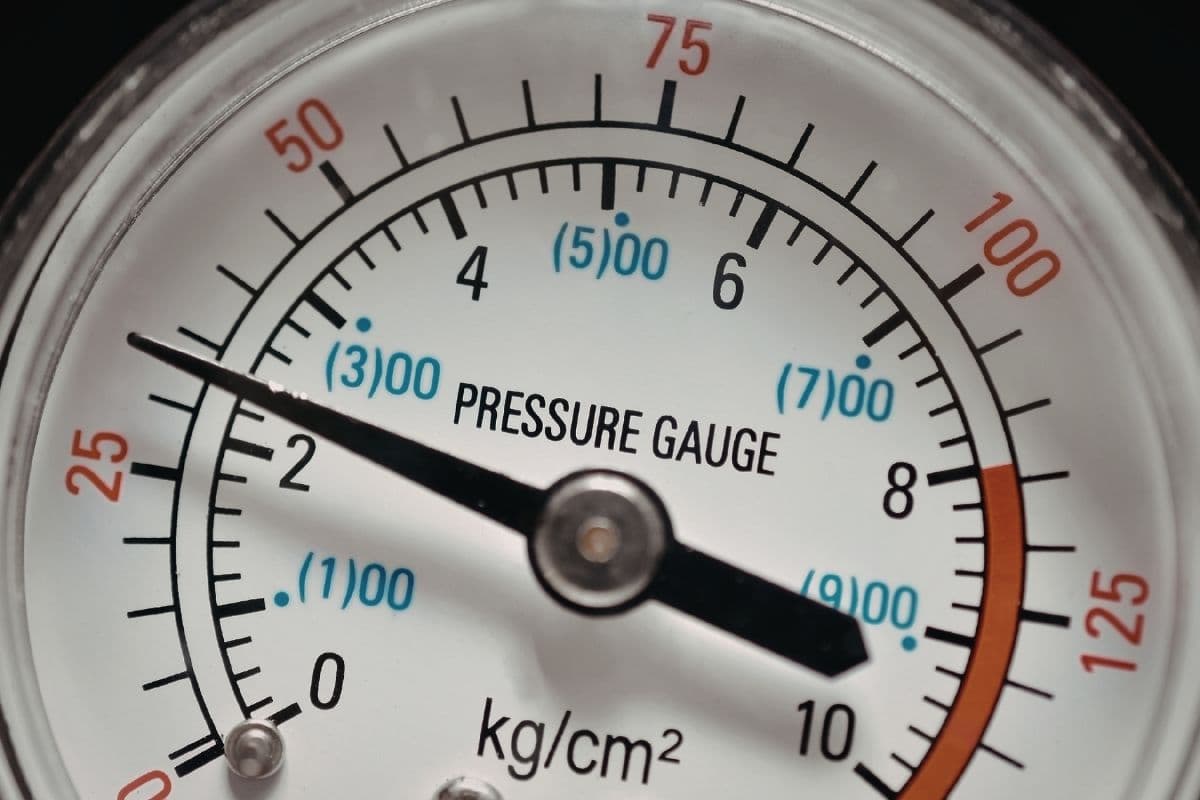
Low well water pressure has six distinct causes: a waterlogged pressure tank, a failing well pump, a dropping water table, a clogged well screen or intake, a faulty pressure switch, or clogged filters and treatment equipment. The fastest way to start diagnosing is to watch the pressure gauge on your pressure tank while someone runs water in the house. If the gauge drops quickly and the pump cycles on and off every few seconds, the pressure tank is the problem. If the gauge builds slowly and the pump runs a long time before shutting off, the pump or well yield is the likely culprit. Start there, then follow the diagnostic steps below to confirm.
Low water pressure from a well is one of the most frustrating problems a homeowner can face, and it almost always gets misdiagnosed. The instinct is to blame the pump, which leads to expensive pump replacements that leave the real problem untouched. In reality, a failing pump is one of the less common causes. A $25 pressure switch or a $300 pressure tank is far more likely to be the culprit, and both are fixable without pulling anything out of the ground.
The reason misdiagnosis is so common is that every cause produces the same symptom at the tap: weak flow. You cannot tell from a dribbling shower whether the problem is the pressure tank, the pump, the water table, a clogged screen, the pressure switch, or a blocked filter. But you can tell in minutes with the right diagnostic steps, without expensive service calls.
This guide walks through all six causes, gives you a step-by-step diagnosis path, and explains exactly what to do for each one.
Is It Actually Low Pressure or Low Flow?
Before diagnosing, it helps to understand that pressure and flow are related but distinct.
Pressure is the force pushing water through the pipes, measured in PSI (pounds per square inch). A standard residential well system cycles between a cut-in pressure of 30 or 40 PSI and a cut-out of 50 or 60 PSI. Most households run comfortably at 40 to 60 PSI.
Flow rate is the volume of water delivered per unit of time, measured in gallons per minute (GPM). A typical residential well pump delivers 5 to 20 GPM. A household of four people typically needs 5 to 8 GPM for comfortable simultaneous use.
You can have adequate pressure but poor flow if your pipes are undersized or your pump cannot sustain its rated GPM. You can have adequate flow but poor pressure if your pressure switch settings are too low. Most homeowners report "low pressure" when they experience either problem or both together.
Checking your pressure gauge gives you the starting data point. If the gauge reads below 30 PSI while water is being used, pressure is genuinely low. If it reads 40 to 50 PSI but showers still feel weak, the problem may be flow restriction somewhere between the well and the fixture.
Is It a Pressure Problem or Something Else?
A few situations can mimic low pressure but have different causes worth ruling out first:
Single fixture only
If pressure is weak at only one faucet or showerhead, clean or replace the aerator or showerhead. Mineral buildup is the most common cause of localized flow restriction and takes two minutes to check.
Pressure fine normally but drops when two things run at once
This is a capacity issue — your pump's flow rate is adequate for single-use but cannot keep up with simultaneous demand. Possible causes include an undersized pump, a low-yield well, or undersized supply pipes.
Pressure fine until recently, then sudden drop
Sudden changes usually point to a mechanical failure — waterlogged tank, failing pump, or a stuck check valve — rather than gradual system decline.
Pressure drops in summer or during drought
Water table decline. The well cannot deliver water as fast as the pump is demanding it. This is a yield problem, not a mechanical one.
Once you have ruled out single-fixture issues and confirmed the problem is system-wide, start the diagnostic below.
The 5-Minute Pressure Gauge Test
This is the fastest way to narrow down the cause before doing anything else.
What you need: A clear view of the pressure gauge on your pressure tank. This is the round dial gauge mounted near the tank or on the pipe entering the tank. If you do not have one, a gauge can be installed on any hose bib close to the tank for about $15.
The test:
- Note the gauge reading when no water is running. It should sit at or near the cut-out pressure — 50 or 60 PSI on most systems.
- Have someone run a faucet fully open. Watch the gauge.
- Note: how quickly does the pressure drop? At what PSI does the pump kick on? How quickly does it recover? Does the pump cycle on and off rapidly?
What the results tell you:
Pressure drops quickly (within seconds), pump cycles on and off repeatedly
Waterlogged pressure tank. The bladder has failed and there is no air cushion to buffer demand. The pump is working correctly — the tank is not.
Pump turns on and runs for a long time but pressure builds slowly or barely reaches cut-out
Pump is underperforming. Possible failing pump, worn impellers, or declining well yield.
Pressure drops and the pump does not turn on, or turns on briefly and shuts off
Pressure switch failure or wiring issue. The switch is not reading pressure correctly or not sending the correct signal.
Pressure at the gauge looks fine (40+ PSI) but flow at fixtures is weak
Flow restriction downstream — clogged filter, partially closed valve, or mineral buildup in pipes.
Pressure gauge reads zero with no water running
Pump has stopped delivering water entirely. Check the circuit breaker first, then the pressure switch.
The Six Causes: Diagnosis and Fix
Cause 1: Waterlogged Pressure Tank
How common: The most frequent cause of sudden-onset low pressure on residential well systems.
What happens: Inside a modern bladder-type pressure tank, a rubber bladder separates the water from a pre-charged air cushion. When the pump fills the tank, water compresses the air. That compressed air is what pushes water through the house when you open a tap, allowing the pump to rest between cycles. When the bladder ruptures or develops a leak, water fills the entire tank and the air cushion is lost. The pump now has to cycle on every time you open a faucet, building pressure from scratch each time. This is called short-cycling.
Symptoms:
- Pressure gauge fluctuates rapidly when water is running
- Pump turns on and off every 5 to 10 seconds
- Water pressure pulses or surges rather than flowing steadily
- You can hear the pump clicking on and off frequently
Confirm it: With the pump off and pressure relieved, press the Schrader valve on top of the pressure tank (it looks like a tire valve). If water sprays out rather than air, the bladder has failed and the tank is waterlogged.
Fix: Replace the pressure tank. This is the appropriate fix and is not negotiable — a failed bladder cannot be repaired. A standard 32 to 50 gallon residential pressure tank costs $150 to $400. Installation by a plumber or well contractor typically adds $150 to $300. This is a straightforward job and one of the less expensive well system repairs.
Before replacing the tank, confirm the air pre-charge is correct on the new tank. The pre-charge should be set to 2 PSI below the cut-in pressure of the pressure switch. For a 30/50 switch, the pre-charge should be 28 PSI. For a 40/60 switch, the pre-charge should be 38 PSI. Setting this correctly prevents short-cycling from day one.
Typical cost: $300 to $700 installed.
Cause 2: Faulty Pressure Switch
How common: Second most common cause, often overlooked because it is cheap and easy to check.
What happens: The pressure switch is a small device mounted near the pressure tank on a quarter-inch tube. It reads system water pressure and tells the pump when to turn on (at cut-in PSI) and when to shut off (at cut-out PSI). Standard residential settings are 30/50 PSI or 40/60 PSI.
Several things can go wrong. The contacts inside can burn, pit, or corrode, causing a poor electrical connection that prevents the pump from starting reliably. The sensing tube can clog with sediment, preventing the switch from reading pressure accurately. Insects — particularly ants, which are famously attracted to the electrical components inside the switch — can clog or damage the internal mechanism. The spring mechanism can wear out, causing the switch to read incorrectly.
Symptoms:
- Pressure gauge reads normal but pump will not turn on
- Pump turns on but does not turn off
- Pump turns on erratically or needs to be manually reset
- Low pressure despite the pump running normally
- Pump hums but does not start (can also indicate a bad capacitor)
Confirm it: With power off, remove the cover of the pressure switch. Look for burned or pitted contacts, insect debris, rust, or corrosion on the sensing port. Tapping the switch casing sometimes temporarily restores a connection on corroded contacts — if the pump kicks on after a tap, the contacts are the problem.
Fix: Replace the pressure switch. A new switch costs $15 to $40 and takes about 30 minutes to install if you are comfortable with basic electrical work — it involves connecting a few wires and a threaded fitting. Turn off power to the pump at the circuit breaker before starting. Label the wires before disconnecting.
If you adjust the switch settings rather than replace it, note that the large center nut adjusts both cut-in and cut-out pressure together. Turning clockwise raises pressure. A full turn typically changes the setting by a few PSI. Do not set cut-out pressure above 60 PSI — this stresses pumps and plumbing. Always reset the pressure tank pre-charge to 2 PSI below the new cut-in setting whenever you change switch settings.
Typical cost: $15 to $40 for DIY; $75 to $200 including professional labor.
Cause 3: Failing Well Pump
How common: Third most common cause. More likely if the pump is over 10 years old, if water quality is poor, or if the well has run dry at any point.
What happens: A submersible well pump has a motor and a series of impellers that force water up the drop pipe. Several specific failure modes cause low pressure rather than complete failure:
Worn impellers reduce the pump's output GPM even when the motor runs normally. Abrasive sediment in sandy aquifers accelerates impeller wear. A pump with worn impellers runs continuously but cannot build pressure past a certain point.
A failing check valve — located just above the pump at the bottom of the drop pipe — allows pressurized water to flow back down into the well when the pump shuts off. The system must re-pressurize from zero every time the pump cycles. Symptoms are similar to a waterlogged tank but the tank itself tests fine.
A bad capacitor in the control box prevents the motor from starting at full power. The pump may hum, start slowly, or draw more current than normal. Control box capacitors are inexpensive and are one of the most common electrical failures on submersible pumps, accounting for a significant fraction of "pump failures" that turn out to be nothing more than a $30 capacitor replacement.
Cavitation occurs when the water table drops below the pump intake during periods of heavy use, causing the pump to draw air. This produces distinctive sputtering from faucets, erratic pressure, and can cause impeller damage if it occurs repeatedly.
Symptoms:
- Pump runs for long periods but pressure builds slowly or never reaches cut-out
- Pressure is adequate at first but drops significantly during sustained use
- Air sputtering from faucets during or after heavy water use
- Pump has been in service more than 10 years
- Sudden pressure loss following unusual events (power surge, running dry during drought)
Confirm it: A licensed well contractor can measure the pump's output in GPM and compare it to the manufacturer specification. Clamp-on ammeter readings can also indicate motor wear. These tests are definitive but require professional equipment.
Fix: Depends on the specific failure mode. A bad capacitor: $30 to $75 and a DIY repair if the control box is above ground. A failed check valve: requires pulling the pump assembly, typically $500 to $1,500 depending on well depth. Worn impellers or motor failure: pump replacement, typically $800 to $2,500 installed depending on depth and pump size. See our well pump replacement cost guide for regional pricing breakdowns.
One important note: do not simply replace the pump if you have not ruled out the pressure tank and pressure switch first. Both present similar symptoms and cost a fraction of pump replacement.
Typical cost: $800 to $2,500 installed for full pump replacement. Capacitor: $30 to $75 DIY.
Cause 4: Dropping Water Table or Low Well Yield
How common: Highly common during drought and dry seasons; also occurs as a permanent condition in wells that have been over-drilled for the aquifer's natural yield.
What happens: Every well has a yield — the rate at which the aquifer can deliver water to the borehole. A typical household needs 5 GPM or more for comfortable simultaneous use. Many rural wells yield 3 to 5 GPM under normal conditions. During drought or high seasonal demand, the water table drops and the pump's intake approaches the water surface. The pump begins drawing air alongside water, pressure becomes erratic, and eventually the pump runs dry.
Penn State Extension and the US Geological Survey both note that seasonal aquifer depletion is a common and expected phenomenon, not necessarily a sign of permanent well failure. In most cases, the water table recovers when rainfall returns. In areas with severe groundwater depletion from agricultural or municipal extraction — parts of California, the Great Plains, and the Southwest — the decline can be more lasting.
Symptoms that distinguish this from mechanical failure:
- Problem is seasonal — worse in late summer and fall, better in spring
- Problem worsens significantly during drought conditions in your region
- Pressure is fine at low-demand times (overnight, early morning) but collapses during peak use
- Air sputtering from faucets during heavy use that clears up when you stop drawing water and wait
- Muddy or sandy water at low-pressure moments (pump is approaching the bottom of the well and pulling sediment)
- Pressure recovers after resting the system for 30 to 60 minutes
Fix options:
Conservation during dry periods
Stagger high-demand activities (laundry, dishwasher, irrigation, showers) across the day rather than running them simultaneously. Avoid heavy water use during periods of known drought stress.
Lower the pump
A licensed well contractor can lower the pump further into the borehole to access water below the current pump depth. This is appropriate when there is water available below the current pump position. Not appropriate if the borehole itself is running dry.
Add a storage tank
A holding tank installed between the well and the pressure tank stores water during periods of low demand (overnight) and buffers peak demand periods. This is the most reliable solution for genuinely low-yield wells.
Deepen or redrill the well
For wells that have declined permanently due to aquifer changes, deepening to a lower aquifer or drilling a new well may be the only long-term solution. This is expensive ($5,000 to $15,000 or more) and should only be considered after confirming that lower aquifers exist and are accessible.
Do not run the pump dry. If the well is running low, turn off the pump and wait for recovery rather than running it continuously. A pump running without water overheats and damages impellers within minutes.
Typical cost: Storage tank installation: $1,500 to $4,000. Pump lowering: $400 to $1,000. Well deepening: $5,000 to $15,000+.
Cause 5: Clogged Well Screen or Intake
How common: Less common than the causes above but worth knowing, particularly in older wells and those with high iron or manganese.
What happens: At the bottom of the well casing, a well screen filters sediment and allows water to enter from the aquifer. Over years and decades, mineral scale, sediment, and most significantly iron bacteria can accumulate on the screen and the surrounding borehole wall. Iron bacteria form thick, reddish-brown or orange slime that coats surfaces and dramatically restricts water flow into the borehole. The pump output drops not because the pump has failed but because water cannot get into the borehole fast enough.
This failure mode is often gradual — pressure declines slowly over months or years rather than suddenly overnight. Homeowners sometimes attribute this to an "aging system" without recognizing that the well can often be rehabilitated.
Symptoms:
- Gradual pressure decline over months or years
- Well has high iron or iron bacteria in the water
- Flow rate has declined from what it was when the well was new
- Water has reddish-brown or orange staining or slime
- The pump tests fine but yield has dropped significantly
Confirm it: A well contractor can perform a yield test (comparing current output to the well's original driller's log) and a pump test to determine whether reduced yield is coming from the well or the pump.
Fix: Well rehabilitation, which involves brushing the screen and casing mechanically, surging water to dislodge deposits, and chemical treatment with acidic or oxidizing solutions to dissolve mineral scale and kill iron bacteria. This is a licensed contractor job. Well rehabilitation can restore significant yield in a well that appears exhausted from biofouling and mineral deposits.
Typical cost: $500 to $2,000 for professional well rehabilitation depending on well depth and severity of clogging.
Cause 6: Clogged Filters or Treatment Equipment
How common: Surprisingly common and almost always overlooked — the most easily fixed cause of low well water pressure.
What happens: A sediment filter installed at the point of entry, or a water softener or iron filter in the treatment train, becomes clogged and restricts flow before water ever reaches the household plumbing. Many homes check the pump, the tank, and the pressure switch while ignoring a filter housing that has not been serviced in two years.
Symptoms:
- Pressure is low throughout the house but the pressure gauge at the tank reads normal
- Pressure immediately before the filter is normal, pressure downstream is low
- Flow has declined gradually, not suddenly
- Pressure improves noticeably when you open the bypass valve on a softener or iron filter
Confirm it: If you have any treatment equipment installed, use its bypass valve to route water around it and check whether pressure at the fixtures improves immediately. If pressure returns to normal on bypass, the treatment equipment is the restriction.
Also check the sediment filter housing. A clogged 5-micron sediment filter creates significant back-pressure. If the filter has not been changed recently, swap it before investigating anything else.
Fix: Replace the sediment filter cartridge. Regenerate or service the water softener or iron filter. If a filter is consistently clogging faster than expected, check whether the filter micron rating is appropriate for your water's sediment level — you may need a coarser pre-filter ahead of a fine filter to extend cartridge life.
Typical cost: $5 to $30 for a sediment filter cartridge. Service call for a stuck or failed softener: $100 to $300.
Diagnosis Decision Tree
Use this to find your most likely cause before calling a contractor.
| Question | Answer | Likely Cause / Next Step |
|---|---|---|
| Is pressure low at all fixtures throughout the house? | No, only one fixture | Clean the aerator or showerhead on that fixture |
| Yes | Continue below | |
| Is your pressure gauge reading below 30 PSI while water is running? | No, gauge reads normal but flow feels weak | Check for clogged filters. Bypass any treatment equipment and retest. |
| Yes | Continue below | |
| Does the pump cycle on and off every few seconds? | Yes | Waterlogged pressure tank. Confirm with the Schrader valve test and replace the tank. |
| No | Continue below | |
| Does the pump turn on at all when pressure drops? | No | Check the circuit breaker. If breaker is fine, check the pressure switch contacts and sensing tube. |
| Yes | Continue below | |
| Does the pump run a long time but pressure builds slowly? | Yes, pump under 10 years old | Check well yield and water table. Is it dry season? Have the well yield tested. |
| Yes, pump over 10 years old | Pump wear is likely. Have a contractor test output GPM before replacing. | |
| Does pressure drop sharply when you run multiple things at once but recover when you stop? | Yes | Low well yield or undersized pump. Have a licensed well contractor perform a yield test. The fix is almost always a storage tank, not a new pump. |
DIY vs Call a Contractor
Handle yourself
- Replacing a sediment filter cartridge
- Cleaning an aerator or showerhead
- Checking the circuit breaker
- Inspecting pressure switch contacts (power off)
- Replacing a pressure switch (if comfortable with basic electrical)
- Checking and refilling pressure tank air charge via the Schrader valve
- Replacing a pressure tank (if comfortable with basic plumbing)
Call a licensed well contractor
- Any diagnosis involving the pump itself
- Pulling and replacing a submersible pump
- Well yield testing and static water level measurement
- Well rehabilitation for a clogged screen
- Lowering the pump in the borehole
- Any work that requires opening the well casing
Attempting to pull a submersible pump without the right equipment risks dropping the pump and drop pipe assembly into the well, which is an expensive recovery operation. Well contractors have the hoisting equipment and experience to pull pumps without damage.
If pump replacement is the right next step, our well pump replacement cost calculator gives you a budget estimate based on your specific situation.
How to Increase Well Water Pressure Without a New Pump
If your system is functional but pressure is chronically lower than you would like, a few adjustments can increase it without major expense:
Adjust the pressure switch settings
If your system currently runs on a 30/50 setting and the pump is capable of higher pressure, switching to 40/60 increases the working pressure range by 10 PSI. To do this, replace the pressure switch with a 40/60 model (the same price as a 30/50), then adjust the pressure tank pre-charge to 38 PSI. This change improves pressure at fixtures without affecting pump life, as long as the pump is rated for 60 PSI output.
Install a constant pressure system
A standard well system lets pressure rise and fall between two setpoints — the pump kicks on at 30 or 40 PSI and off at 50 or 60 PSI. A constant pressure controller is an electronic device that varies the pump motor speed in real time to hold pressure at a single steady setpoint regardless of demand, the same way a dimmer switch varies light intensity rather than turning fully on or off. The most common options are a Cycle Stop Valve (a mechanical flow control device) or a variable frequency drive (VFD) controller that adjusts pump speed electronically. This eliminates pressure fluctuation entirely and can make a 40 PSI well system feel much closer to city water. Cost ranges from $300 to $800 installed.
Add a booster pump
For low-yield wells or homes with chronic demand shortfalls, a booster pump installed downstream of the pressure tank adds pressure beyond what the well system delivers. This is especially useful for homes that converted from city water and find well pressure noticeably different.
Frequently Asked Questions
Why is my well water pressure low all of a sudden?
Sudden low pressure points to a mechanical failure rather than a gradual decline. The most likely causes in order of probability are: a waterlogged pressure tank (bladder failure), a failed or sticking pressure switch, a tripped circuit breaker, or a failed pump capacitor. Check the circuit breaker first — it takes five seconds. Then watch the pressure gauge while someone runs water and look for rapid pump cycling, which confirms a waterlogged tank. See the diagnostic steps above to narrow it down before calling a contractor.
Why does my well water pressure drop when I use multiple fixtures at once?
This is almost always a capacity problem rather than a mechanical failure. Your well pump's flow rate cannot keep up with simultaneous demand. The pressure tank empties faster than the pump refills it. Possible causes include an undersized pump, a low-yield well, an undersized pressure tank, or peak-season water table decline. Running high-demand activities sequentially rather than simultaneously helps in the short term. A storage tank or constant pressure system is the long-term solution.
How do I know if my pressure tank is bad?
The most reliable field test: with the pump running, rock or tap the pressure tank. A healthy bladder tank with water and air inside will have some give when you push against it. A waterlogged tank feels completely rigid and heavy throughout. Then press the Schrader valve (the tire valve stem on top of the tank) with the pump off and pressure released. Air should come out. If water sprays out, the bladder has failed.
What PSI should my well water pressure be?
A standard residential well system operates between 30 and 60 PSI. Most comfortable household use falls between 40 and 60 PSI. If you have fixtures on multiple floors, 40/60 settings are typically better than 30/50 because pressure drops 0.43 PSI per foot of elevation. City water is typically delivered at 60 to 80 PSI, so well water at 40 to 60 PSI may feel lower by comparison even when the system is functioning correctly. Do not exceed 60 PSI on a residential well system — higher pressure stresses pipes, fixtures, and the pump.
Can I fix low well water pressure myself?
It depends on the cause. Replacing a sediment filter, cleaning aerators, checking the circuit breaker, and even replacing the pressure switch are reasonable DIY tasks for someone comfortable with basic plumbing and electrical work. Replacing a pressure tank is a bigger job but manageable for a confident homeowner. Anything involving the pump itself — pulling it from the well, testing output, or replacing it — requires a licensed well contractor with the right equipment.
Will a water softener cause low water pressure?
A clogged or improperly sized water softener can restrict flow and reduce pressure at household fixtures. If the softener resin bed has channeled, the venturi injector is clogged, or the bypass valve is partially engaged, pressure downstream will be lower than what the well system is actually delivering. Always check the softener bypass before diagnosing pressure problems elsewhere in the system.
How much does it cost to fix low well water pressure?
It depends entirely on the cause. A new sediment filter cartridge: $5 to $30. Pressure switch replacement: $15 to $200 including labor. Pressure tank replacement: $300 to $700 installed. Pump capacitor: $30 to $75 DIY. Well pump replacement: $800 to $2,500 installed depending on well depth. Storage tank for a low-yield well: $1,500 to $4,000. Well rehabilitation: $500 to $2,000. Get the diagnosis right before spending money — replacing a pump to fix a problem that was actually a $25 pressure switch is a very common and very expensive mistake.
Why does my well pressure drop after I have been away for a few days?
Water sitting in a pressure tank that has a weak or failing bladder loses its air cushion over time. After several days without use, the air has partially escaped and the tank is partially waterlogged. Pressure is low at first draw and improves once the pump refills the system. This is an early sign of bladder failure — the tank is not bad enough to short-cycle constantly yet, but it is declining. Budget for pressure tank replacement.
Glossary
Cut-In Pressure
The PSI level at which the pressure switch signals the well pump to turn on. Standard residential cut-in settings are 30 PSI (for a 30/50 system) or 40 PSI (for a 40/60 system). When water use causes tank pressure to drop to this point, the pump starts and runs until it reaches the cut-out pressure.
Cut-Out Pressure
The PSI level at which the pressure switch signals the well pump to shut off. Standard residential cut-out settings are 50 or 60 PSI. The difference between cut-in and cut-out is called the differential, typically set at 20 PSI. Do not set cut-out above 60 PSI on a residential well system.
Waterlogged Pressure Tank
A pressure tank in which the rubber bladder has failed, allowing water to fill the entire tank volume with no air cushion. A waterlogged tank causes the pump to short-cycle — turning on and off every few seconds — because there is no pressurized air to buffer demand between cycles. The remedy is pressure tank replacement, not pump replacement.
Pressure Switch
A spring-loaded electromechanical device that monitors water pressure in the system and signals the pump to start at the cut-in setpoint and stop at the cut-out setpoint. Typically mounted on a quarter-inch tube near the pressure tank. Replacement switches cost $15 to $40 and are one of the most common and least expensive well system repairs.
Short-Cycling
A condition in which the well pump turns on and off much more frequently than normal, typically every few seconds rather than every few minutes. The most common cause is a waterlogged pressure tank. Short-cycling accelerates pump motor wear significantly and should be corrected as quickly as possible.
Well Yield
The rate at which a well can sustainably deliver water, typically measured in gallons per minute (GPM). A residential well typically needs 5 GPM or more to meet household demand comfortably, though many wells yield less and can still serve a household with proper system design including storage tanks. Well yield is distinct from pump capacity — the pump can only deliver what the aquifer provides.
Schrader Valve
The tire-valve-style fitting on top of a bladder-type pressure tank that allows checking and adjusting the air pre-charge. The pre-charge should be 2 PSI below the cut-in pressure of the pressure switch. On a 30/50 system, set to 28 PSI. On a 40/60 system, set to 38 PSI. Check with the pump off and all pressure released from the tank.
Related Guides
Get Expert Well Help
Connect with qualified well professionals in your area. Free quotes, no obligation.
Get Homeowner Tips in Your Inbox
Well maintenance tips, water quality guides, and seasonal reminders from The Well Guide. Free to your inbox.
By subscribing you agree to receive emails from The Home Guide Network. We respect your privacy. Unsubscribe anytime. Privacy Policy