Best Iron Filters for Well Water 2026: Reviews by Iron Type
The Well Guide Editorial Team
Updated April 2026 · 16 min read
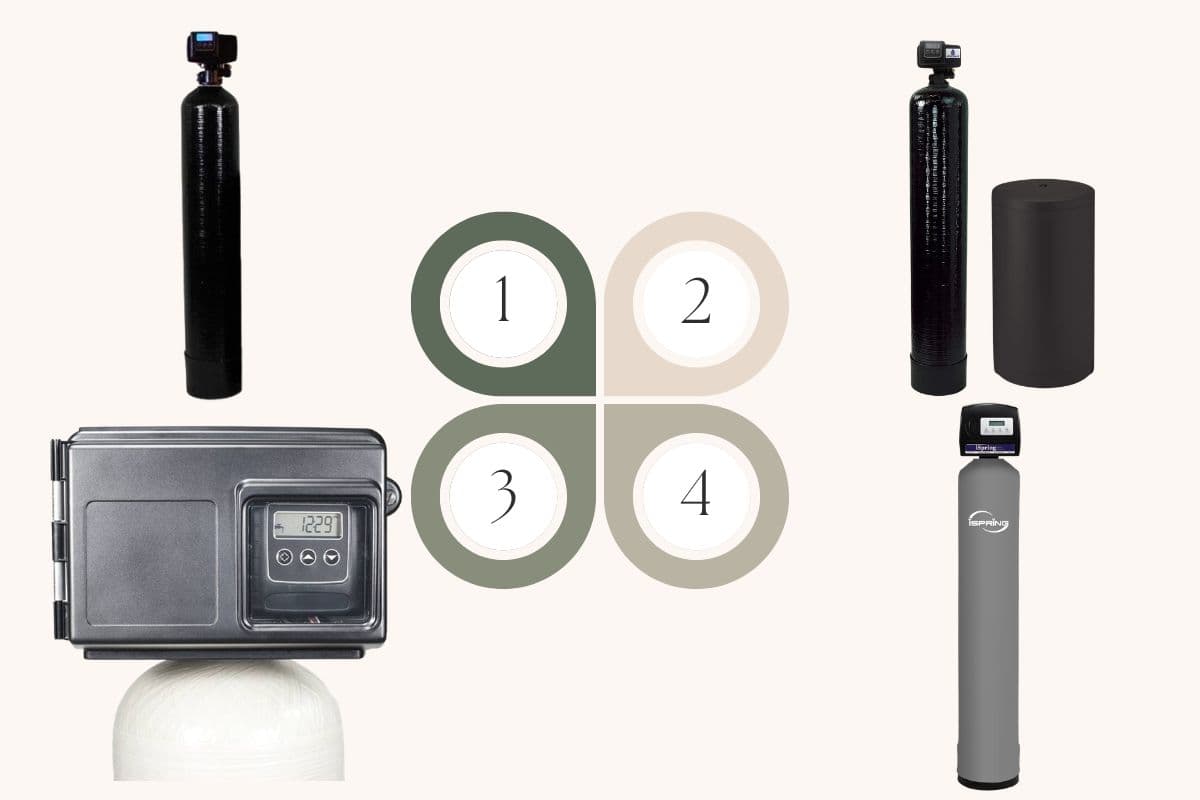
Some links on this page are affiliate links. If you purchase through them, we may earn a small commission at no extra cost to you. This does not affect our recommendations.
TL;DR
The best iron filter for your well depends on which iron type you have (ferrous, ferric, bacterial, or colloidal) and iron concentration. No single filter is “best” for every well. Our picks after evaluating 15+ residential iron filters:
- Best overall: AIS10-25SXT Air Injection (handles 8 ppm iron, Fleck 5600SXT valve, $800 to $1,200)
- Best for high iron (up to 12 ppm): iSpring WCFM500K (set-and-forget, no filter replacement for 10 years, $900 to $1,400)
- Best for iron + hard water combined: IRON Pro 2 Combination (softener + iron filter in one, $850 to $1,400)
- Best premium pick: Premier AIO with Fleck 2510SXT (upgraded valve, 10-year warranty, $1,200 to $1,800)
- Best budget AIO: Durawater Iron Eater (same AIO tech as the AIS10-25SXT at lower price, $700 to $1,000)
For bacterial iron specifically, no filter alone solves the problem; you need shock chlorination first. Before buying any of these products, confirm your iron type through a glass test and a certified lab report.
The Iron-Type Match Rule
The best iron filter for your well is the one that specifically matches your iron type and concentration, not the highest-rated or most expensive system. Installing the wrong equipment for your iron type is the #1 reason iron treatment fails. A system designed for ferrous iron under-performs on ferric iron, a water softener designed for low iron fouls rapidly on high-iron wells, and no iron filter works on bacterial iron without shock chlorination first. Before buying any of the products below, confirm your iron type through a simple glass test and a certified lab report. Your water chemistry determines which product is the right choice, and spending $1,500 on the wrong system is the most common and most expensive mistake in residential iron treatment.
Quick Picks by Iron Type
Already know your iron type? Jump directly to the recommendation for your specific situation:
- Ferrous iron (clear-water iron), under 2 mg/L with hard water: IRON Pro 2 Combination
- Ferrous or mixed iron, 2 to 8 mg/L: AIS10-25SXT Air Injection (our overall pick)
- High iron levels (8 to 12 mg/L), set-and-forget preference: iSpring WCFM500K
- Premium/long-warranty preference: Premier AIO with Fleck 2510SXT
- Budget alternative to the AIS10-25SXT: Durawater Iron Eater
- Bacterial iron: Shock chlorination first (see our shock chlorination guide), then an AIO filter for residual iron
If you don't know your iron type yet, read our iron in well water guide first. The 5-Minute Diagnostic there tells you which type you have using nothing but a clear glass and 5 minutes of observation.
How We Evaluated
Every iron filter review online ranks products without telling you something important: the #1 rated product for ferrous iron is usually the wrong choice for ferric iron, and vice versa. We organized this review by iron type to solve that. Our evaluation framework:
Iron type compatibility. We classified every system by which of the four iron types it effectively treats (ferrous, ferric, bacterial, colloidal). Systems marketed as “universal iron filters” that perform poorly on multiple types were excluded.
Iron capacity (mg/L or ppm). Every system has an upper limit on the iron concentration it can handle. We verified manufacturer specs against user reports of real-world performance.
Valve quality. The control valve (Fleck 5600SXT, Fleck 2510SXT, or similar) determines long-term reliability more than any other component. Fleck-branded valves have 15-20 year service lives; cheap valves fail in 3-5 years.
Tank size and flow rate. Undersized systems restrict household water flow below acceptable levels (under 8 GPM for a typical home). We verified flow rates against the manufacturer's tank dimensions.
Installation requirements. We distinguished systems that are genuinely DIY-friendly (water softeners, simple iron filters) from systems that require professional installation (complex AIO setups, ducted systems). Marketing claims of “easy installation” were verified against real installation documentation.
Total cost of ownership (10-year). We calculated total cost including system purchase, installation, media replacement, electricity, and routine maintenance over a 10-year period. The cheapest system upfront often is not the cheapest over 10 years.
Iron Filter Comparison Table
| Product | Iron Capacity | Technology | Valve | Annual Maintenance | Best For |
|---|---|---|---|---|---|
| AIS10-25SXT Air Injection | 8 ppm | Air injection oxidation | Fleck 5600SXT | $150 to $200 | Most residential wells (best overall) |
| iSpring WCFM500K | 12 ppm | Catalytic media + air regeneration | Digital LED | $0 to $50 | High iron, set-and-forget |
| IRON Pro 2 Combination | 4 to 7 ppm | Ion exchange (fine mesh resin) | Fleck 5600SXT | $100 to $200 | Iron + hard water combined |
| Premier AIO (Fleck 2510SXT) | 8 ppm | Air injection oxidation | Fleck 2510SXT | $150 to $200 | Premium/long warranty |
| Durawater Iron Eater | 7 ppm | Air injection oxidation | Fleck 5600SXT | $150 to $200 | Budget AIO alternative |
The 5 Best Iron Filters
AIS10-25SXT Air Injection: Best Overall
Best for: Most residential wells with iron between 2 and 8 ppm, particularly wells with combined iron, sulfur, and manganese problems.
Check Price on AmazonWhat it is: A whole-house air injection oxidation (AIO) iron filter by Oceanic Water Systems, built around the industry-standard Fleck 5600SXT digital control valve. The system uses a single-tank AIO design where air injected into the top of the tank oxidizes ferrous iron into filterable ferric iron particles, which are captured by the media bed and flushed during automatic daily backwashing.
Specs
- Iron capacity: Up to 8 ppm
- Hydrogen sulfide capacity: Up to 4 ppm
- Manganese capacity: Up to 2 ppm
- Tank size: 10" x 54"
- Flow rate: Suitable for homes with 2-4 bathrooms
- Valve: Fleck 5600SXT digital
- Media life: 5 to 10 years
- Warranty: 5 years system, 10 years tank
✓Pros
- Industry-standard Fleck 5600SXT valve with 15 to 20 year service life
- Single-tank AIO design eliminates need for separate pumps or oxidation tanks
- No chemicals, no salt, no chlorine required
- Handles iron, hydrogen sulfide (rotten-egg smell), and manganese simultaneously
- Fully automatic daily backwashing
- Widely stocked and well-supported by installers
×Cons
- Requires drain for backwash water (roughly 30 to 60 gallons per backwash cycle)
- Professional installation recommended for electrical integration
- Does not treat bacterial iron (shock chlorinate the well first)
- 8 ppm iron cap means wells with 8+ ppm iron need to step up to a higher-capacity system
Real cost: $800 to $1,200 for the system, $500 to $1,500 for professional installation. Total 10-year cost: $2,500 to $4,500.
Not the right choice if: You have iron levels above 8 ppm (step up to the iSpring WCFM500K), you have hard water requiring softening in the same system (consider the IRON Pro 2 Combination instead), or you have confirmed bacterial iron (no iron filter solves bacterial iron alone).
iSpring WCFM500K: Best for High Iron and Set-and-Forget
Best for: Wells with iron levels between 4 and 12 ppm, homeowners who want a genuine set-and-forget experience with minimal ongoing maintenance.
Check Price on AmazonWhat it is: A whole-house iron, manganese, and hydrogen sulfide filtration system using catalytic media with automatic air-regeneration. Unlike traditional AIO systems, the WCFM500K uses a proprietary media that regenerates using only air (no chemicals, no oxidizers, no filter replacement), with a digital LED control that allows customizable auto-flush intervals.
Specs
- Iron capacity: Up to 12 ppm (50 percent higher than AIS10-25SXT)
- Manganese + hydrogen sulfide combined capacity: Up to 20 ppm
- Technology: Catalytic media with automatic air regeneration
- Valve: Digital LED control with customizable auto-flush
- Media life: Up to 10 years with no filter replacement
- Warranty: 1 year manufacturer, 30-day money-back guarantee
- Extras: Continuous water monitoring, LED display
✓Pros
- Highest iron capacity among our picks (12 ppm vs 7 to 8 ppm for most alternatives)
- No filter replacements for 10 years (lowest ongoing maintenance cost)
- No chemicals, no salt, no chlorine
- Modern LED digital control with customizable flush intervals
- Strong choice for heavy iron wells where traditional AIO systems would require larger tanks
- Excellent customer support reputation from iSpring
×Cons
- Shorter manufacturer warranty than some competitors (1 year vs 5 years for AIS10-25SXT)
- Proprietary media means replacement parts come from iSpring only
- Does not reduce Total Dissolved Solids (TDS) or hardness
- Requires water softener installation AFTER this system if hard water is also a problem
- Requires hydrogen sulfide to be removed before installation if H2S concentrations are very high
Real cost: $900 to $1,400 for the system, $500 to $1,500 for professional installation. Total 10-year cost: $1,800 to $3,400 (lower than AIS10-25SXT due to no media replacement).
Not the right choice if: You have extreme iron levels above 12 ppm (consult a water treatment professional for commercial-grade systems), you need hardness removal in the same system (consider the IRON Pro 2 Combination), or you prefer the longer manufacturer warranty of Fleck-valve systems.
IRON Pro 2 Combination: Best for Iron + Hard Water
Best for: Wells with combined iron (under 7 ppm ferrous iron) AND hard water (above 10 gpg). Common in the Midwest and parts of the Northeast.
Check Price on AmazonWhat it is: A combination water softener and iron filter in a single unit by AFWFilters, using fine mesh ion-exchange resin specifically designed to handle hardness AND ferrous iron simultaneously. The Fleck 5600SXT digital metered valve adjusts regeneration frequency based on actual water usage, optimizing salt consumption.
Specs (48,000 grain model)
- Iron capacity: 4 to 7 ppm (ferrous iron only)
- Hardness capacity: Up to 70 gpg
- Manganese capacity: Up to 6 ppm
- Technology: Fine mesh ion exchange resin
- Valve: Fleck 5600SXT digital metered
- Warranty: 5 years resin, 10 years tank
- Also available in 32,000, 64,000, and 80,000 grain sizes
✓Pros
- Solves two problems in a single unit (hardness + iron)
- Fine mesh resin specifically designed to handle iron without premature fouling
- Fleck 5600SXT valve with 15 to 20 year service life
- Pre-loaded tank ships ready to install
- Multiple capacity options (32k to 80k grain) to match household size
- Lower total cost than buying a softener and iron filter separately
×Cons
- Iron capacity capped at 4 to 7 ppm (lower than dedicated AIO systems)
- Handles only ferrous iron (clear-water iron); ferric or bacterial iron will foul the resin rapidly
- Requires salt refill every 4 to 8 weeks ($5 to $15 per refill)
- Regeneration uses 30 to 60 gallons of water per cycle
- Not appropriate for homes on septic systems with strict salt-loading limits
Real cost: $850 to $1,400 for the 48,000 grain system, $400 to $1,000 for professional installation. Total 10-year cost: $2,500 to $4,500 (including salt and resin replacement).
Not the right choice if: You have iron above 7 ppm (step up to AIS10-25SXT or iSpring WCFM500K), you have ferric iron or bacterial iron (this system fouls rapidly on both), you have a septic system with salt-loading concerns, or you don't have hard water (a dedicated iron filter is better).
Premier AIO with Fleck 2510SXT: Best Premium Pick
Best for: Larger homes (4+ bathrooms) with moderate iron levels (2 to 8 ppm), homeowners who prioritize long-term reliability and extended warranty coverage.
Check Price on AmazonWhat it is: A premium whole-house AIO iron filter using the upgraded Fleck 2510SXT control valve (vs the 5600SXT used in most residential systems). The 2510 valve handles higher flow rates and has heavier-duty internal components designed for larger homes or higher usage.
Specs
- Iron capacity: Up to 8 ppm
- Hydrogen sulfide: Effectively removed
- Manganese: Effectively removed
- Tank size: 10" x 54"
- Technology: Air injection oxidation (single tank)
- Valve: Fleck 2510SXT (upgrade from standard 5600SXT)
- Media: 1.0 cubic feet catalytic carbon
- Warranty: 10 years extended (vs 5 years standard)
✓Pros
- Upgraded Fleck 2510SXT valve is heavier-duty and longer-lasting than the 5600SXT
- 10-year extended warranty (vs 5 years for most competitors)
- Handles higher flow rates for larger homes (4+ bathrooms)
- Same AIO technology as the AIS10-25SXT but with premium components throughout
- Backed by American Water Solutions, a well-established US-based company
×Cons
- Significantly more expensive than standard AIO systems ($300 to $500 premium)
- Same 8 ppm iron cap as the AIS10-25SXT (the premium is in durability, not capacity)
- Professional installation required
- Larger footprint (10" x 54" tank) may not fit in smaller utility spaces
Real cost: $1,200 to $1,800 for the system, $500 to $1,500 for professional installation. Total 10-year cost: $3,000 to $5,000.
Not the right choice if: You have a smaller home where the standard AIS10-25SXT is adequate, you are comfortable replacing a $900 system in 7 to 10 years rather than paying a premium for longer warranty, or you have iron above 8 ppm (the premium valve doesn't increase iron capacity).
Durawater Iron Eater: Best Budget AIO Alternative
Best for: Cost-conscious homeowners with iron levels under 7 ppm who want the same AIO technology as the AIS10-25SXT at a lower upfront price.
Check Price on AmazonWhat it is: A whole-house AIO iron filter similar in design to the AIS10-25SXT but typically at a slightly lower price point. Built around the Fleck 5600SXT valve with 1.5 cubic feet of upgraded catalytic carbon media.
Specs
- Iron capacity: Up to 7 ppm
- Hydrogen sulfide: Effectively removed
- Manganese: Effectively removed
- Tank size: 10" x 54"
- Technology: Air injection oxidation (single tank)
- Valve: Fleck 5600SXT digital
- Media: 1.5 cubic feet catalytic carbon (pre-loaded)
✓Pros
- Typically $100 to $300 less expensive than AIS10-25SXT
- Same Fleck 5600SXT valve for reliable long-term operation
- Pre-loaded media for easier installation
- Upgraded catalytic carbon specifically formulated for well water with iron
- Similar technology and performance profile to more expensive alternatives
×Cons
- Slightly lower iron capacity than AIS10-25SXT (7 ppm vs 8 ppm)
- Tank color may vary due to manufacturer availability
- Slightly smaller brand footprint than Oceanic Water Systems
- Same professional installation requirement as other AIO systems
Real cost: $700 to $1,000 for the system, $500 to $1,500 for professional installation. Total 10-year cost: $2,300 to $4,200.
Not the right choice if: You have iron above 7 ppm (step up to AIS10-25SXT or iSpring WCFM500K), you want the longer-warranty premium option (Premier AIO), or you have hard water requiring a combination system (IRON Pro 2).
How to Choose an Iron Filter
The iron filter decision comes down to four questions in order. Answer them honestly before ordering any system.
Question 1: What iron type do you have?
- Ferrous iron only (low levels, water clear on draw): Water softener (IRON Pro 2 if you also have hardness) or AIO filter.
- Ferrous + ferric iron mix (the most common scenario): AIO filter (AIS10-25SXT, iSpring WCFM500K, Premier AIO, or Durawater).
- Bacterial iron: Shock chlorination first. Then AIO filter if residual iron remains. No filter alone solves bacterial iron.
- Colloidal iron: Professional water analysis required. Off-the-shelf residential filters may not adequately remove colloidal iron.
Question 2: What is your iron concentration?
- Under 2 ppm: Water softener with iron-removal capability (IRON Pro 2) is often adequate.
- 2 to 8 ppm: Standard AIO filter (AIS10-25SXT is the default choice).
- 8 to 12 ppm: High-capacity filter (iSpring WCFM500K is the default choice).
- Above 12 ppm: Consult a water treatment professional for commercial-grade systems.
Question 3: Do you also have hard water, and how hard?
- Hard water above 10 gpg combined with iron: IRON Pro 2 Combination solves both problems in one unit.
- Hard water with iron above 7 ppm: Install a dedicated iron filter (AIS10-25SXT or iSpring WCFM500K) BEFORE a separate water softener. The iron filter protects the softener resin from iron fouling.
- No hard water, only iron: Dedicated iron filter. No softener needed.
Question 4: What is your home size and water demand?
- 1 to 3 bathrooms, 2 to 4 residents: Any of the 5 systems above work (standard residential sizing).
- 4+ bathrooms, 5+ residents: Premier AIO with Fleck 2510SXT (heavier-duty valve handles higher flow) or step up to commercial-residential sizing.
- Whole-house water demand exceeds 12 GPM peak: Consult a water treatment professional for properly sized system.
For the full treatment framework with the 4 iron types explained, see our iron in well water guide.
What to Look For in Specs
Not all iron filter specs are created equal. Four specs actually matter for long-term performance:
Iron capacity (ppm). The upper limit on iron concentration the system can handle without frequent fouling or backwashing. Match the spec to your tested iron level plus a 25 to 50 percent safety margin.
Valve brand and model. Fleck-branded valves (5600SXT, 2510SXT) have 15 to 20 year service lives and parts availability. Off-brand valves often fail in 3 to 5 years and parts become unavailable. The valve is worth more than the tank long-term.
Tank size and flow rate. Tank dimensions (like 10"x54") determine both media capacity and peak flow rate. A 10"x54" tank handles approximately 7 to 10 GPM, adequate for most 2 to 4 bathroom homes. For larger homes, look for 12"x52" or 13"x54" tanks.
Warranty terms. Standard residential systems come with 1 to 5 year warranties. Premium systems offer 7 to 10 years. The longer warranty is worth $200 to $500 more only if you plan to stay in the home for 7+ years.
Installation and Setup
Most AIO iron filters require professional installation. The systems are mechanically simple but integrating them into existing plumbing, electrical, and drainage requires expertise most homeowners don't have.
Typical installation involves:
- Tying into the main water line AFTER the well pressure tank but BEFORE any existing water softener or distribution
- Running a dedicated 120V electrical circuit for the control valve
- Running a drain line for backwash water (30 to 60 gallons per cycle, sloped drain required)
- Programming the valve for backwash frequency based on tested water chemistry
- Bypass valve installation so the system can be serviced without cutting off household water
Professional installation costs $500 to $1,500 depending on plumbing complexity and whether existing shut-off valves are present. DIY installation is possible for plumbing-experienced homeowners but requires 8 to 12 hours and strict attention to manufacturer instructions.
For hard water combination systems (IRON Pro 2), installation is simpler. These systems install like standard water softeners and most homeowners with basic plumbing experience can install them in 4 to 6 hours.
Need a well water treatment professional?
Iron filter installation requires correct sizing, proper drainage, and electrical integration. A licensed installer can test your water, recommend the right system from the 5 options above, and install it correctly. Get free quotes from licensed well water specialists near you.
Cost Breakdown Summary
| System | System Cost | Installation | Annual Maintenance | 10-Year Total |
|---|---|---|---|---|
| AIS10-25SXT Air Injection | $800 to $1,200 | $500 to $1,500 | $150 to $200 | $2,500 to $4,500 |
| iSpring WCFM500K | $900 to $1,400 | $500 to $1,500 | $0 to $50 | $1,800 to $3,400 |
| IRON Pro 2 Combination | $850 to $1,400 | $400 to $1,000 | $100 to $200 | $2,500 to $4,500 |
| Premier AIO (Fleck 2510SXT) | $1,200 to $1,800 | $500 to $1,500 | $150 to $200 | $3,000 to $5,000 |
| Durawater Iron Eater | $700 to $1,000 | $500 to $1,500 | $150 to $200 | $2,300 to $4,200 |
The iSpring WCFM500K wins on 10-year total cost despite higher upfront price due to the lack of filter replacements. The Durawater Iron Eater wins on upfront cost. The AIS10-25SXT wins on balance of upfront cost, iron capacity, and long-term reliability. The IRON Pro 2 wins on cost efficiency when you need both iron removal AND water softening.
Related Guides
Frequently Asked Questions
What is the best iron filter for well water in 2026?
The best iron filter for well water depends on your specific iron type and concentration rather than any single “best overall” pick. For typical residential wells with iron between 2 and 8 ppm, the AIS10-25SXT Air Injection system with Fleck 5600SXT valve is the most commonly recommended choice, handling iron, manganese, and hydrogen sulfide in a single whole-house unit. For wells with higher iron concentrations (up to 12 ppm) or homeowners who want a genuine set-and-forget system, the iSpring WCFM500K with catalytic media regeneration is preferred. For wells with combined iron and hard water, the IRON Pro 2 Combination solves both problems in one unit. For premium buyers wanting a 10-year warranty, the Premier AIO with Fleck 2510SXT is the choice. For budget-conscious buyers, the Durawater Iron Eater delivers similar AIO technology at a lower price point. Match the system to your iron type and concentration first; price is a secondary consideration.
How much does an iron filter for well water cost?
Residential iron filter costs range from $700 to $1,800 for the system itself, plus $400 to $1,500 for professional installation. Budget AIO systems (Durawater Iron Eater) start around $700 to $1,000. Standard AIO systems (AIS10-25SXT) are $800 to $1,200. Combination systems (IRON Pro 2) are $850 to $1,400 and handle both iron and hardness. Premium systems (Premier AIO with Fleck 2510SXT, iSpring WCFM500K) are $900 to $1,800. Annual maintenance costs $0 to $200 depending on system type (iSpring WCFM500K has near-zero maintenance; AIO systems require $150 to $200 annually for media replacement every 5 to 10 years). 10-year total cost of ownership ranges from $1,800 to $5,000. For context, untreated iron typically causes $3,000 to $8,000 in household damage over 20 years (appliance replacement, plumbing repair, laundry damage), meaning most iron filters pay for themselves within 5 to 10 years.
What is the difference between an AIO iron filter and a water softener for iron removal?
AIO (Air Injection Oxidation) iron filters are dedicated iron treatment systems that handle iron concentrations up to 8 to 12 ppm and also remove hydrogen sulfide (rotten-egg smell) and manganese. AIO systems work by injecting air into the water to oxidize dissolved ferrous iron into particulate ferric iron, which is then captured by filter media and flushed out during automatic backwashing. Water softeners with iron-removal capability handle only low iron concentrations (typically under 2 to 5 ppm of ferrous iron only) and primarily remove hardness (calcium and magnesium). Water softeners use ion exchange resin that also captures some iron, but high iron levels foul the resin rapidly and cause softener failure within 6 to 12 months. For most well water iron problems (2 to 8 ppm), an AIO filter is the right choice. For combined iron (under 7 ppm) and hard water, a combination system like the IRON Pro 2 is more cost-effective than separate systems. For iron levels above 8 ppm, an AIO filter or the iSpring WCFM500K is required regardless of whether hard water is also present.
Can I install an iron filter myself or do I need a professional?
Iron filter installation is technically within DIY scope for homeowners with plumbing experience, but professional installation is recommended for most people because the cost savings from DIY installation ($500 to $1,500 saved) are often outweighed by the cost of mistakes (incorrect sizing, improper drainage, damaged equipment). Combination systems like the IRON Pro 2 install similarly to standard water softeners and most plumbing-experienced homeowners can install them in 4 to 6 hours. AIO iron filters are more complex because they require a dedicated electrical circuit for the control valve, a sloped drain line capable of handling 30 to 60 gallons per backwash cycle, and correct programming of the valve based on tested water chemistry. A licensed water treatment professional will also perform a water test before installation and verify the system reduces iron to acceptable levels after installation. If you are comfortable running copper or PEX plumbing, installing a 20-amp electrical circuit, and troubleshooting valve programming, DIY installation is feasible. Otherwise, hire a professional.
How long does an iron filter last?
Most residential iron filters last 15 to 20 years with proper maintenance, though specific component lifespans vary. The control valve (Fleck 5600SXT or 2510SXT) lasts 15 to 20 years. The media inside the tank (catalytic carbon, Katalox Light, or similar) lasts 5 to 10 years before needing replacement ($200 to $400). The tank itself lasts 20+ years and is typically warranted for 10 years. Ion-exchange resin in combination systems like the IRON Pro 2 lasts 10 to 15 years before replacement. The iSpring WCFM500K uses a proprietary regenerating media that manufacturers claim lasts up to 10 years without replacement. Factors that shorten lifespan include: iron levels above the system's capacity (causes media fouling), bacterial iron contamination (clogs media rapidly), improper water chemistry (extreme pH), lack of regular backwashing, and inadequate professional maintenance. A properly sized and maintained system from a reputable manufacturer with a Fleck valve should reliably serve the household for 15 to 20 years.
Do iron filters remove arsenic, lead, or other contaminants?
Most iron filters remove only iron, manganese, and hydrogen sulfide. They do not effectively remove arsenic, lead, bacteria, nitrates, or other health-critical contaminants. For comprehensive water safety, iron filters should be part of a broader treatment system that addresses all contaminants your water test reveals. If your well has arsenic (above 10 ppb), install a dedicated arsenic treatment system (see our arsenic in well water guide). If your well has bacteria, install UV disinfection or continuous chlorination. If your well has nitrates, install reverse osmosis for drinking water. The IRON Pro 2 Combination system includes hardness removal alongside iron, but still does not remove arsenic or other health-critical contaminants. A comprehensive water test (covering iron, arsenic, lead, bacteria, nitrates, pH, hardness, and hydrogen sulfide at minimum) is essential before selecting any water treatment system. Installing an iron filter without addressing other contaminants leaves genuine health risks untreated.
What's the difference between ferrous iron and ferric iron, and why does it matter for filter selection?
Ferrous iron (also called clear-water iron) is dissolved iron in its reduced chemical state; water containing ferrous iron appears clear from the tap but turns red or brown when left standing as the iron oxidizes in air. Ferric iron (red-water iron) is already oxidized iron existing as small solid particles; water containing ferric iron appears colored directly from the tap. The distinction matters enormously for filter selection: water softeners handle ferrous iron (low levels only) but fail on ferric iron because the particles are too large for ion-exchange resin. Sediment filters handle ferric iron but miss ferrous iron entirely because dissolved iron passes through. AIO (Air Injection Oxidation) filters handle both because they first oxidize ferrous iron into ferric iron (creating a filterable particle) and then capture all iron particles with the filter media. For most residential wells with a mix of ferrous and ferric iron, an AIO filter is the correct choice. For wells with only ferrous iron and low concentrations, a combination softener-iron filter like the IRON Pro 2 works well.
What should I do if my iron filter fails or stops working?
First, verify the problem is actually the filter rather than a change in your water chemistry. Test your water with a home test kit or send a sample to a certified lab to check current iron, manganese, and hydrogen sulfide concentrations. If levels have increased beyond your filter's capacity, the system is undersized and needs upgrading. If levels are within the filter's capacity but orange staining has returned, inspect the filter for: incomplete backwash cycles (check drain line for blockage), exhausted media (inspect for media color changes or crusting), failed valve components (listen for valve cycling during automatic regeneration), or biological fouling from bacterial iron (slimy residue in the media or on the tank walls). Bacterial iron requires shock chlorination to restore filter function; contact the manufacturer for media cleaning procedures or replacement. If the valve itself has failed, Fleck-branded valves have excellent parts availability and most component failures are repairable for $100 to $300. Document the failure mode before calling for service so the technician can bring appropriate parts. For systems under warranty, contact the manufacturer before performing any repairs.
Glossary
Air injection oxidation (AIO)
Air injection oxidation is the most common whole-house iron treatment technology for wells with moderate to high iron concentrations. An AIO system draws air into the top of the filter tank, creating a pocket of pressurized air that oxidizes incoming dissolved ferrous iron (Fe2+) into particulate ferric iron (Fe3+). The iron particles are then captured by filter media (typically catalytic carbon, Katalox Light, BIRM, or manganese greensand). Automatic periodic backwashing flushes accumulated iron particles out and refreshes the media bed. AIO systems handle iron from 2 to 12 ppm depending on size and simultaneously treat hydrogen sulfide (rotten-egg smell) and manganese. AIO systems cost $700 to $1,800 for the system plus $400 to $1,500 installed. They are the industry standard for whole-house iron removal and are used in the AIS10-25SXT, Premier AIO, Durawater Iron Eater, and similar systems.
Fleck control valve
Fleck is the industry-standard brand of control valves used in residential water treatment systems, manufactured by Pentair. Fleck valves manage the backwash, regeneration, and service cycles of iron filters and water softeners, making them the most critical component for long-term reliability. The Fleck 5600SXT is the most common residential valve, used in the AIS10-25SXT, Durawater Iron Eater, and IRON Pro 2 Combination systems. The Fleck 2510SXT is a heavier-duty valve with higher flow capacity and longer service life, used in premium systems like the Premier AIO. Fleck valves typically have 15 to 20 year service lives with excellent parts availability. Off-brand valves often fail within 3 to 5 years with limited parts availability, which is why water treatment professionals strongly recommend Fleck-valve systems even at slightly higher upfront cost.
Backwash cycle
A backwash cycle is an automatic cleaning process that iron filters perform periodically (typically daily) to flush accumulated iron particles out of the filter media and refresh the media bed. During backwash, the valve reverses the direction of water flow through the tank, lifting and agitating the media to release captured iron, which then flows out through a drain line. Backwash cycles typically use 30 to 60 gallons of water per cycle and run for 10 to 20 minutes. Homes on septic systems should verify that their septic system can accommodate the additional water volume, and all installations require a properly sloped drain line capable of handling the backwash flow. A filter that has stopped backwashing correctly will rapidly lose iron removal capacity and may fail within weeks.
Catalytic media
Catalytic media is a class of filter materials that accelerate the oxidation and capture of iron particles without being consumed in the process. Common catalytic media for iron filters include Katalox Light (a specialized zeolite), BIRM, greensand, and proprietary blends like the media used in the iSpring WCFM500K. Catalytic media typically lasts 5 to 10 years before requiring replacement ($200 to $400), significantly longer than simple sediment filter cartridges. Different catalytic media have different pH tolerances, flow rate requirements, and iron capacity limits, which is why proper system sizing requires matching the media to your specific water chemistry. The iSpring WCFM500K uses a proprietary catalytic media with automatic air-regeneration that manufacturers claim lasts up to 10 years without replacement.
Iron capacity (ppm)
Iron capacity is the maximum iron concentration (measured in parts per million, or ppm, equivalent to mg/L) that an iron filter can effectively treat without frequent fouling, failed backwashing, or orange water reaching household taps. Residential iron filters have capacities ranging from 4 ppm (low-end water softeners with iron removal) to 12 ppm (high-capacity systems like the iSpring WCFM500K). Always match the system's iron capacity to your tested iron level PLUS a 25 to 50 percent safety margin, because iron concentrations can vary seasonally by 20 to 30 percent. A system sized for 5 ppm when your well tests at 4 ppm will likely fail within 12 months because seasonal variation will push levels above capacity. Better to slightly over-size than under-size.
Ion exchange resin
Ion exchange resin is a plastic bead media used in water softeners and some iron filters to capture dissolved minerals (including hardness ions and ferrous iron) by exchanging them for sodium ions from a salt brine. Ion exchange resin handles ferrous iron effectively at low concentrations (typically under 2 to 5 ppm) but fouls rapidly at higher concentrations because iron accumulates faster than salt regeneration can remove it. Fine mesh resin (used in the IRON Pro 2 Combination) is specifically designed with smaller beads that capture more iron per cubic foot than standard resin, handling iron up to 6 to 7 ppm. Ion exchange systems require salt refills every 4 to 8 weeks and do not handle ferric iron, bacterial iron, or colloidal iron at any concentration.
Fine mesh resin
Fine mesh resin is a specialized type of ion-exchange resin with smaller bead sizes than standard softener resin, providing more surface area per cubic foot for capturing both hardness minerals AND ferrous iron. Fine mesh resin is used in combination systems like the IRON Pro 2 to handle hard water (up to 70 gpg hardness) plus ferrous iron (up to 6 to 7 ppm) in a single tank. The smaller beads resist the premature fouling that would occur when standard resin encounters iron, giving fine mesh resin a useful service life of 10 to 15 years even in iron-bearing water. Fine mesh resin does not help with ferric iron (particles too large for ion exchange) or bacterial iron (living biofilm clogs resin regardless of mesh size), which is why combination systems are only appropriate for wells with ferrous iron plus hard water.
Whole-house water filter
A whole-house water filter (also called a point-of-entry or POE system) treats all water entering the home at the main water line, so every faucet, shower, and appliance receives filtered water. This is distinct from point-of-use (POU) filters like under-sink reverse osmosis that treat only water at a specific faucet. Iron filters are almost always installed as whole-house systems because iron causes problems at every water point (stained laundry, stained toilets, clogged water heaters, ruined dishwashers) not just at drinking water. Whole-house iron filters are typically installed after the well pressure tank but before any water softener. System sizing must match household peak water demand (typically 8 to 15 GPM for a residential home) to avoid pressure drops at high-flow fixtures.
Total cost of ownership (10-year)
Total cost of ownership is the complete cost of an iron filter over a 10-year period, including upfront system purchase, professional installation, annual maintenance, media replacement every 5 to 10 years, electricity for valve operation, and routine service calls. The upfront system cost typically represents only 40 to 60 percent of the 10-year total, which means the cheapest system at purchase is not always the cheapest overall. For example, the iSpring WCFM500K has a higher upfront cost than the Durawater Iron Eater but lower 10-year cost due to the lack of media replacement. Similarly, the Premier AIO costs more upfront but has a longer warranty that reduces the risk of paying for a replacement system within 10 years. Always calculate 10-year cost when comparing iron filter options; a $500 difference in upfront cost often washes out when long-term maintenance and replacement are factored in.
Get Homeowner Tips in Your Inbox
Well maintenance tips, water quality guides, and seasonal reminders from The Well Guide. Free to your inbox.
By subscribing you agree to receive emails from The Home Guide Network. We respect your privacy. Unsubscribe anytime. Privacy Policy
Get Expert Help
Connect with a licensed well water treatment professional in your area for a free, no-obligation quote on your iron filter installation.